Casement vs. Fixed Windows: Which Window Style Is Right for Your Green Bay Home?
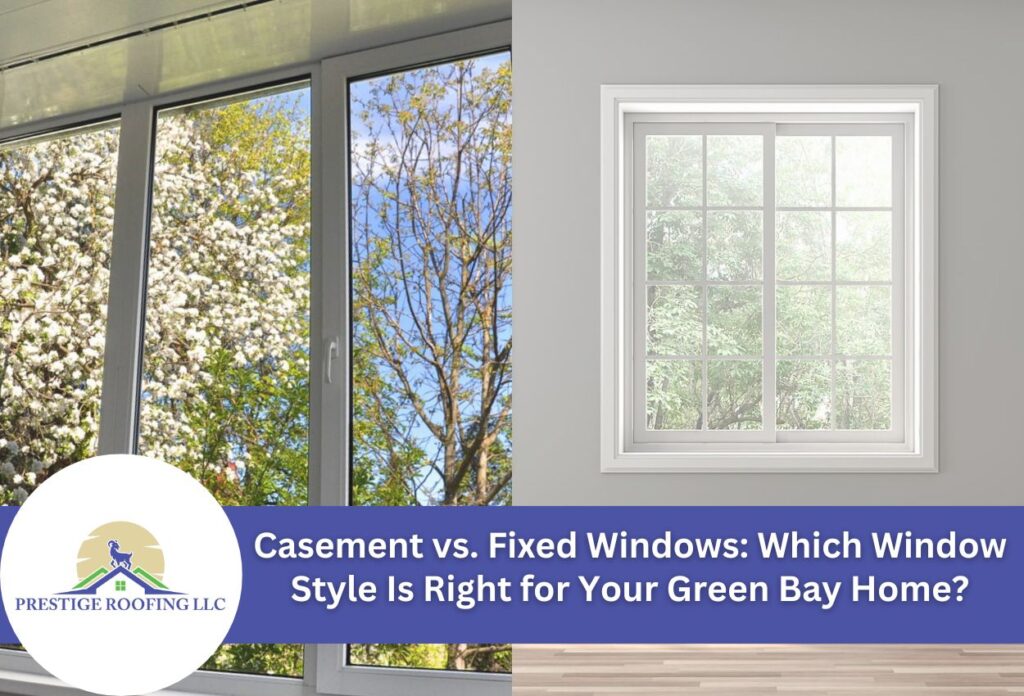
Choosing between casement and fixed windows represents one of the most important decisions homeowners face during window replacement projects. Each window style offers distinct advantages and disadvantages that directly impact your home’s energy efficiency, ventilation, and overall comfort during Wisconsin’s diverse seasons.
Casement windows feature hinged frames that swing outward, providing maximum airflow and unobstructed views when opened. These windows also seal tightly against their frames when closed, making them excellent choices for energy efficiency. Fixed windows, also called picture windows, remain permanently closed and cannot be opened for ventilation. They excel at maximizing natural light and creating stunning focal points while maintaining superior insulation properties.
Understanding the fundamental differences between these window replacement options helps homeowners make informed decisions that align with their specific needs. When it comes to windows, the central importance tends to be energy efficiency. Comparing energy-efficient windows requires evaluating how each style performs in real-world conditions, considering factors like air leakage, insulation values, and long-term durability in changing weather patterns.
How Casement Windows Open Up Possibilities for Your Home
Casement windows deliver exceptional operational benefits that transform how homeowners experience their living spaces. When fully opened, these hinged windows create unobstructed openings that maximize airflow throughout your home. Unlike sliding windows that only open halfway, casement windows swing completely outward, allowing fresh air to enter from multiple angles and creating superior cross-ventilation patterns.
The operational design of casement windows provides precise ventilation control through easy-to-use crank mechanisms. Homeowners can adjust the opening angle to direct airflow exactly where needed, making these windows ideal for capturing cooling breezes or letting out stale indoor air. This level of control represents a significant advantage that casement windows provide over fixed window alternatives.
Enhanced security features distinguish casement windows from other window replacement options. Multiple locking points along the window frame create stronger barriers against forced entry compared to traditional sliding ones. In fact, the outward-opening design makes it nearly impossible for intruders to manipulate locks from outside.
When closed, the sash of the casement windows presses firmly against weatherstripping, creating airtight seals that prevent drafts and moisture infiltration. This compression seal design typically outperforms sliding window systems, contributing to lower energy costs and improved indoor comfort throughout Wisconsin’s variable climate conditions.
The Practical Limitations Every Homeowner Should Know About Casement Windows
While casement windows offer impressive operational benefits, several practical limitations require careful consideration before choosing them as the option for your home. Understanding the disadvantages these windows bring helps homeowners make realistic decisions about their long-term window investment.
The maintenance requirements for casement windows exceed those of fixed windows due to their moving parts. The crank mechanisms, hinges, and weatherstripping need regular adjustments to ensure it operates properly. Hardware may require lubrication, tightening, or occasional replacement as normal wear occurs. It can also become dangerous to clean the exterior of these windows on upper floors, as homeowners cannot safely reach outside surfaces without specialized equipment or professional assistance.
Installation restrictions are another significant consideration when comparing windows in order to find the right one to fit around specific features of the home. Since casement windows open outward, they may interfere with walkways, patios, decking, or carefully planned landscaping. The arc of the window’s swing must remain clear of obstacles, which can limit placement options ne+r outdoor living spaces or property boundaries.
Safety concerns also arise when casement window installation occurs near high-traffic areas. Open windows extending into walkways create collision hazards, particularly during evening hours or in locations with limited visibility. These spatial requirements often make fixed windows more practical choices for certain architectural situations.
Window replacement options should account for these practical limitations alongside the benefits of casement windows which eliminate mechanical maintenance needs and spatial conflicts while still providing excellent energy efficiency and natural light transmission for Wisconsin homes.
Why Fixed Windows Excel in Specific Homes
Fixed windows demonstrate superior performance in applications where unobstructed views and the need for the maximum amount of natural light take priority over ventilation capabilities. These stationary windows eliminate moving parts entirely, creating seamless glass surfaces that showcase outdoor landscapes while flooding interior spaces with daylight. The absence of frames, sashes, or hardware within the glass area maximizes the viewing space, making fixed windows ideal for rooms designed around scenic vistas or architectural focal points.
Structural integrity is a key advantage when choosing this window option among different options. Fixed windows distribute weight evenly across their frames without the stress points created by hinges or operating mechanisms. This design allows for larger glass expanses and enhanced resistance to wind, which is particularly important during Wisconsin’s severe weather events. The rigid construction also maintains consistent weatherproofing over extended periods.
Security benefits are another feature distinguishing fixed windows from casement alternatives for vulnerable homes. Fixed windows cannot be opened from outside, eliminating potential entry points and making them excellent choices for ground-level installations or areas with limited natural surveillance. This inherent security feature reduces homeowner concerns about unauthorized access while maintaining the benefits of fixed windows.
Minimal maintenance requirements make fixed windows practical window replacement options for hard-to-reach locations. Without mechanical components requiring adjustment or lubrication, these windows only need periodic cleaning and weatherstripping checked occasionally. This simplified maintenance appeals to homeowners seeking long-term performance without the ongoing disadvantages of a casement window’s hardware upkeep and operational adjustments.
Where Fixed Windows Fall Short of Homeowner Expectations
Fixed windows present significant ventilation limitations that require homeowners to develop alternative strategies for maintaining healthy indoor air quality. Unlike casement windows that provide direct control over airflow, fixed windows offer zero natural ventilation capabilities, forcing homeowners to rely entirely on other operable windows throughout the home or mechanical HVAC systems to circulate fresh air. This dependency becomes particularly problematic in rooms where fixed windows are the only window installation, creating stagnant air conditions that may contribute to moisture buildup and reduced comfort levels.
Cleaning challenges pose ongoing maintenance difficulties that many homeowners underestimate when selecting fixed windows for their window replacement projects. Exterior glass surfaces require regular cleaning to maintain clear views and optimal light transmission, but accessing outside surfaces on upper floors presents safety concerns and logistical complications. Professional cleaning services become necessary expenses in order to maintain the outer appearance of a building, contrasting with casement windows that allow access to both glass surfaces from the interior.
Emergency exit restrictions create serious safety considerations that impact window placement decisions throughout the home. Building codes require egress windows in bedrooms and basement areas, eliminating fixed windows as options in these critical locations. The inability to provide emergency escape limits fixed windows to supplementary roles rather than primary window solutions, requiring careful coordination with other window replacement options to meet both safety requirements and design objectives in residential applications.
Comparing Energy Efficiency: Which Window Type Saves More Money?
The sealing mechanisms between casement and fixed windows create distinct differences in long-term energy performance for Wisconsin homeowners. Casement windows utilize compression seals that press firmly against weatherstripping when closed, creating multiple contact points around the entire perimeter of the window. This compression system typically achieves lower rates of air leaks compared to sliding window options, making the advantages of casement windows particularly notable for energy conservation.
Fixed windows excel at thermal performance due to their stationary design eliminating potential gaps around the seals. Without hinges, cranks, or operational hardware creating thermal bridges, fixed windows often demonstrate superior insulation and consistent weatherproofing over extended periods..
Air leak testing reveals important distinctions when comparing the energy-efficiency of both styles. Quality casement windows typically achieve air leak rates below 0.3 cubic feet per minute per square foot, while fixed windows often perform even better due to permanent sealing systems. However, casement window installation quality significantly impacts these performance metrics, as improper weatherstripping or hardware adjustment can compromise the seals’ effectiveness.
Frame design also influences heating and cooling costs throughout Wisconsin’s temperature extremes. Both window replacement options benefit from advanced framing materials and multi-pane glass systems, but the absence of operational components in fixed windows eliminates potential areas of energy loss. Homeowners seeking maximum energy savings often combine both types of windows throughout their strategically, placing fixed windows where ventilation is unnecessary while utilizing casement windows where airflow control provides additional comfort benefits.
Making the Right Choice for Your Window Replacement Project
Selecting between casement and fixed windows requires carefully evaluating room-specific factors that directly impact day to day lives. Ventilation needs vary significantly throughout different areas of the home, making casement window advantages essential for kitchens, bathrooms, and bedrooms where air circulation controls moisture and odors. Fixed windows work exceptionally well in living rooms, dining areas, and hallways where natural light matters more than airflow capabilities.
Safety requirements also influence the choice in window, particularly in bedrooms and basement areas requiring egress compliance. Building codes mandate operable windows in sleeping areas, making casement windows a necessary choice despite any disadvantages.
It’s also crucial to consider homeowners with mobility limitations or aging concerns. Casement windows with easy-turn cranks provide simple operation compared to heavy sliding alternatives, though fixed windows eliminate operational requirements entirely. Professional consultation helps identify which window replacement option best accommodates current and future accessibility needs.
Regardless of window style, professional installation significantly affects the long-term performance of the window through proper weatherproofing, structural integration, and operational adjustments. Comparing energy-efficient windows requires expertly evaluating your home’s specific architectural features, climate exposure, and usage patterns. Local window replacement experts understand Wisconsin weather challenges and can recommend a combination of casement and fixed windows. Quality casement window installation ensures proper sealing and smooth operation, while fixed window installation focuses on structural integrity and weatherproofing excellence for lasting performance throughout changing seasons.
Explore Your Window Replacement Options with Prestige Roofing LLC
Deciding between casement and fixed windows is crucial for enhancing your home’s energy efficiency, security, and aesthetic appeal. Each window style offers distinct advantages and challenges, making it important to choose based on your specific needs. Casement windows are ideal for those seeking better ventilation and ease of cleaning, while fixed windows excel in safety and minimal maintenance, providing uninterrupted views.
Understanding the pros and cons of each can significantly impact your comfort and energy bills in Wisconsin. Don’t let the complexities of window replacement slow you down. Call Prestige Roofing LLC today at (920) 791-0414 to discuss your window options and find the perfect fit for your Green Bay home. Let us help you make an informed decision that aligns with your home’s needs and your aesthetic preferences.