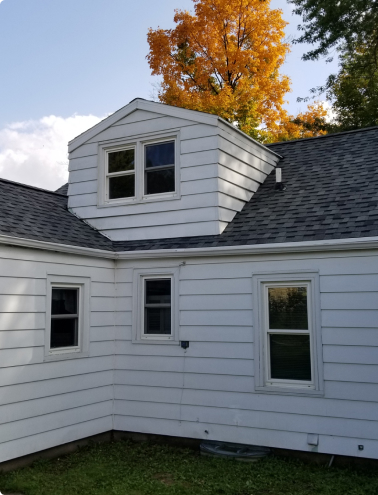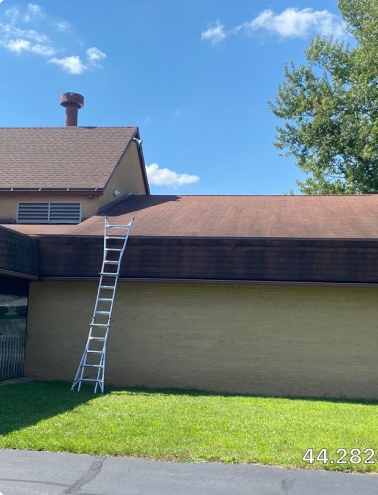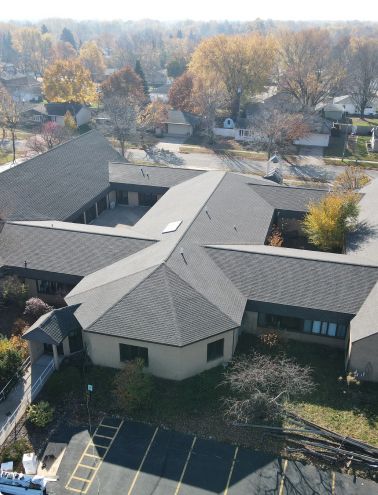
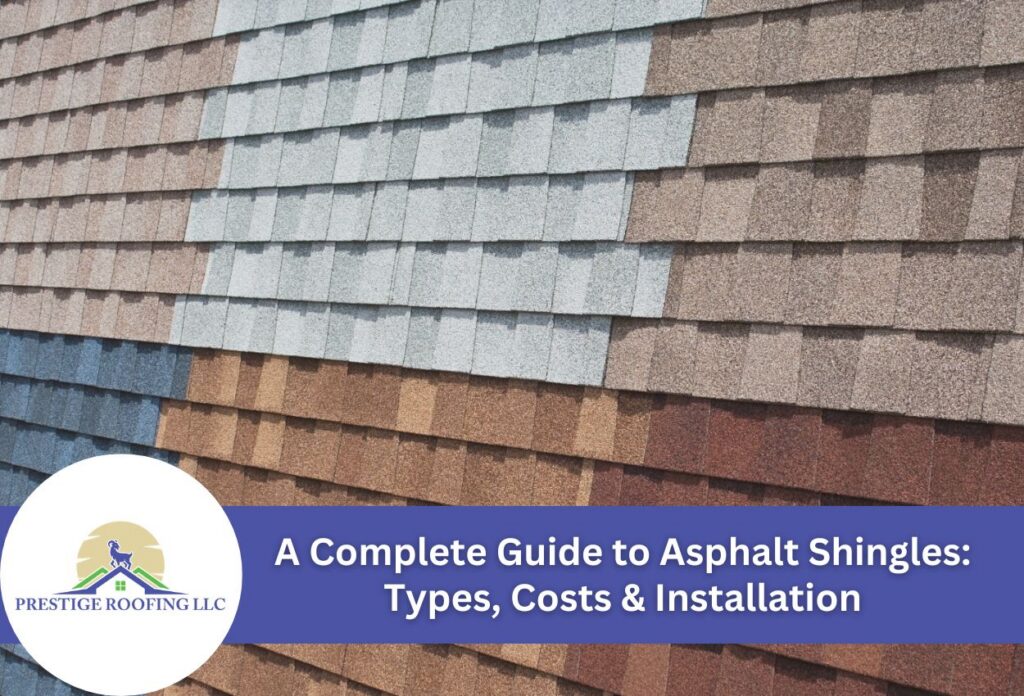

Asphalt shingles cover more Green Bay homes than any other roofing material, and for good reason. They hold up against Wisconsin’s heavy snowfall, wide temperature changes, and the year-round humidity that rolls in from Lake Michigan. If you’re a homeowner in the Green Bay area, understanding asphalt shingles is one of the smartest moves you can make before spending money on a roof.
This complete guide to asphalt shingles covers everything that matters: the difference between 3-tab and architectural shingles, what a full replacement costs, how long each type lasts, and what to look for when choosing a contractor. Whether you’re installing a roof on a new home or replacing one that’s worn out, this article gives you the facts you need to make a confident decision.
Green Bay’s climate puts real stress on roofing materials. Snow buildup, ice dams, and repeated temperature changes during spring and fall can shorten a roof’s life faster than most homeowners expect. Knowing your options now can save thousands of dollars later. Read on to get the full picture.
*Please note, price ranges listed in this article may not reflect the final cost of your project. Prices are subject to change based on various factors such as local labor rates, material quality, and more. All costs established in this article are rough estimates based on average industry rates.
What Are the Different Types of Asphalt Shingles Available for Residential Homes?
There are three main types of asphalt shingles: 3-tab, architectural (also called dimensional or laminate), and premium designer shingles, and each one differs in thickness, lifespan, and how well it handles wind and snow.
| Shingle Type | Typical Lifespan | Wind Resistance Rating | Approximate Cost Range (per square) | Best Use Case |
|---|---|---|---|---|
| 3-Tab | 15 to 20 years | Up to 60 mph | $70 to $100 | Budget replacements on low-wind-exposure roofs |
| Architectural (Dimensional) | 25 to 30 years | Up to 110 to 130 mph | $100 to $150 | Standard residential homes in high-wind or heavy-snow regions |
| Premium / Designer | 30 to 50 years | Up to 150 mph | $150 to $250+ | High-end homes or roofs needing maximum durability |
3-tab shingles are flat and made from a single layer of asphalt-coated fiberglass or organic mat. Architectural shingles bond two or more layers together, creating a thicker, heavier profile. Premium shingles take that further, some mimic the appearance of wood shake or slate at a fraction of the replacement cost.
Architectural shingles have largely replaced 3-tab shingles as the standard on Green Bay residential roofs. Wind speeds in the area regularly top 20 mph, and a shingle rated only to 60 mph leaves little margin during spring and fall storms. The jump from 3-tab to architectural also adds 10 or more years of expected lifespan, a difference that often outweighs the higher upfront cost per square. For homeowners looking at a deeper breakdown of specific brands and product lines within each category, a dedicated comparison of the best asphalt shingles for residential homes covers those details side by side.
How Long Do Asphalt Shingles Last on a Roof in Green Bay’s Climate?
Asphalt shingles last 15 to 25 years for 3-tab, 25 to 30 years for architectural, and 30 to 50 years for premium shingles, but Green Bay’s climate can push those numbers toward the lower end faster than many homeowners expect. Heavy snow, ice dams, sustained wind exposure, and year-round humidity from Lake Michigan all wear shingles down well before their manufacturer’s warranties expire. The gap between a shingle’s warranty timeline and its actual lifespan in Wisconsin often comes down to how well the roofing system underneath was installed.
| Factor That Shortens Shingle Life | How It Damages Shingles | Green Bay Risk Level |
|---|---|---|
| Poor attic ventilation | Traps heat in summer, accelerates granule loss: allows moisture buildup in winter | High |
| Ice dams | Forces water under shingles during freeze and thaw cycles, causing deck rot and shingle lifting | High |
| UV exposure | Breaks down asphalt binders over time, causing brittleness and cracking | Moderate |
| Improper installation | Misaligned nailing and inadequate sealing allow wind uplift and water intrusion | High |
| Deferred maintenance | Missing shingles, clogged gutters, and failed flashing left unrepaired accelerate full-roof damage. | High |
Of all five factors, poor attic ventilation is the one Green Bay homeowners underestimate most. When warm indoor air has nowhere to escape in winter, it heats the roof deck unevenly. Snow melts, runs to the cold eave, and refreezes, forming ice dams that work water underneath shingles with every temperature swing. Over several seasons, that cycle alone can cut years off an otherwise sound roof.
If your home is more than 20 years old or shows signs of uneven snow melt on the roofline, scheduling a ventilation inspection alongside any shingle inspection is a smart next step. Prestige Roofing LLC assesses both the shingles and the attic system together, so no single weak point gets overlooked.
What Do Asphalt Shingles Cost Per Square Foot Installed in Green Bay?
Installed asphalt shingles in Green Bay typically cost $3.50 to $7.50 per square foot, depending on shingle type, which works out to $5,250 to $11,250 for a 1,500 square foot roof before factoring in tear-off, roof deck repairs, or permit fees.
| Shingle Type | Material Cost (per sq ft) | Installation Labor (per sq ft) | Total Installed Cost (per sq ft) | Typical Cost for 1,500 sq ft Roof |
|---|---|---|---|---|
| 3-Tab | $0.70 to $1.00 | $2.00 to $3.00 | $3.50 to $4.50 | $5,250 to $6,750 |
| Architectural (Dimensional) | $1.00 to $1.50 | $2.50 to $3.50 | $4.50 to $6.00 | $6,750 to $9,000 |
| Premium / Designer | $1.50 to $2.50+ | $3.00 to $5.00 | $5.50 to $7.50+ | $8,250 to $11,250+ |
Roofing contractors price jobs by the “square.” A roofing square equals 100 square feet. So a 1,500 square foot roof is 15 squares. Knowing your square count lets you apply any per-square quote directly to your own roof size and cross-check bids side by side.
Several variables push final costs above those base ranges in Green Bay. Steep roof pitches or complex rooflines require more labor time and safety equipment. Tearing off one or more existing shingle layers adds $1.00 to $2.00 per square foot on average. Rotted or damaged roof decking boards need replacement before new shingles go down. Green Bay municipal permit fees apply to most full replacements and should be included in any legitimate contractor estimate. Spring and early fall are the most popular scheduling windows, which can also carry slightly higher demand-driven costs compared to off-peak months.
The lowest bid rarely accounts for all of these variables, which often means shortcuts on a roof deck inspection, underlayment quality, or ice dam protection problems that show up as leaks and early failure within just a few winters. Cost matters, but the full scale of what a contractor includes in that number matters more.
How Do You Choose the Right Asphalt Shingles for Your Home and Climate?
Choosing the right asphalt shingles comes down to seven factors, and in Green Bay, wind resistance rating should be the first thing on your list, not the last. Spring and fall winds regularly exceed 20 mph here, which means a shingle without a Class H or UL 2390 wind resistance rating is working at its limits before a major storm even rolls in.
- Climate performance, wind and impact resistance: Look for shingles rated Class H (UL 2390) for wind resistance, which covers winds up to 150 mph, or at a minimum Class D (up to 90 mph). Architectural shingles rated to 110 to 130 mph offer a strong baseline for most Green Bay residential roofs, where gusts during spring storms can push well past 20 mph.
- Roof pitch and structure: Most Green Bay homes have pitched roofs designed to shed snow, typically a 4:12 slope or steeper. Standard asphalt shingles perform well on these pitches, but low-slope sections below a 2:12 ratio need a different approach, such as roll roofing or modified bitumen, since standard shingles are not rated for near-flat applications.
- HOA or neighborhood appearance requirements: Some Homeowners Associations in Green Bay specify approved shingle colors, profiles, or minimum quality tiers. Check your HOA rules before selecting a product. Switching shingles after installation due to an approval issue adds thousands of dollars in unnecessary costs.
- Budget and long-term value trade-offs: 3-tab shingles run $3.50 to $4.50 per square foot installed, while architectural shingles cost $4.50 to $6.00 per square foot installed. The 10-plus-year lifespan difference between the two types often makes architectural shingles the better long-term value, even though they cost more upfront.
- Manufacturer warranty length and coverage terms: Most architectural shingles carry limited lifetime warranties, but the coverage details vary widely. Pay attention to the prorated period, many warranties drop to minimal coverage after 10 to 15 years, and confirm whether the warranty transfers to a new owner if you sell the home.
- Energy efficiency ratings: Some architectural and premium shingles carry ENERGY STAR ratings for solar reflectivity. In Green Bay, where heating costs drive most energy bills, a cool roof shingle may not deliver the same savings as in warmer climates, but lighter-colored shingles still reduce summer heat gain and can lower attic temperatures meaningfully. The U.S. Department of Energy roofing materials page provides additional guidance on energy-efficient roofing options and reflectivity ratings.
- Contractor recommendation based on installation experience: A contractor who installs a specific manufacturer’s shingles regularly knows how those products perform in Wisconsin winters. Some manufacturers also require certified installers to honor their full warranty terms, so the contractor you hire directly affects the coverage you receive.
Wind resistance rating is the one spec Green Bay homeowners most often overlook when comparing shingle options, yet it directly affects both storm performance and long-term warranty coverage. Working through these seven criteria before requesting quotes gives you a clear standard to hold every bid against. Prestige Roofing LLC can walk you through brand-specific product options that meet each of these criteria for your specific roof and budget.
What Are the Best Asphalt Shingles for Residential Homes in Wisconsin?
No single brand is the best choice for every home the right asphalt shingle depends on your budget, appearance goals, and how well the product handles Wisconsin’s temperature changes, wind, and ice. GAF, Owens Corning, CertainTeed®, and Atlas all offer strong architectural shingle lines with wind ratings of 110 mph or higher, but each brand brings different warranty terms and cold-climate features to the table. For a broader overview of how asphalt shingles are manufactured and rated across the industry, an asphalt shingle overview provides useful context on product standards and performance classifications.
| Brand | Top Product Line | Wind Resistance Rating | Limited Warranty Length | Notable Cold-Climate Feature |
|---|---|---|---|---|
| GAF | Timberline HDZ® | 130 mph | Limited lifetime | LayerLock nailing technology reduces wind uplift in freeze-prone conditions |
| Owens Corning | Duration® Shingles | 130 mph | Limited lifetime | SureNail Technology improves adhesion and holding power in cold temperatures |
| CertainTeed | Landmark Series® | 110 mph | Limited lifetime | StreakFighter algae resistance performs well in high-humidity lake-effect conditions |
| Atlas | Pinnacle® Pristine | 130 mph | Limited lifetime | HP42 high-performance self-seal strip holds through repeated temperature changes |
Contractor certification programs play a direct role in how much warranty protection a Green Bay homeowner actually receives. GAF’s Master Elite program and Owens Corning’s Preferred Contractor designation both allow certified installers to offer enhanced warranty coverage, in some cases extending labor and materials protection well beyond what a standard installation unlocks. Choosing a certified installer is one of the few decisions that improves both the installation quality and the warranty coverage at the same time.
Before settling on a brand, weigh wind rating, warranty transfer terms, and installer certification together. Prestige Roofing LLC can match the right product line to your roof’s specific needs in Green Bay.
What Does the Asphalt Shingle Installation Process Look Like From Start to Finish?
A typical residential asphalt shingle replacement in Green Bay takes 1 to 3 days for installation once materials are on-site, but the full project timeline, including permitting, runs closer to 2 to 3 weeks from contract signing to finished roof. Understanding each step makes it easier to know what your contractor should be doing and why skipping any step creates problems down the road.
The process starts with a full roof inspection and project scoping. The contractor measures the roof, identifies damaged decking, flags flashing concerns, and determines how many existing shingle layers need to come off. From there, a permit application goes to the City of Green Bay. Most full replacements require a building permit, and that approval typically adds 1 to 2 weeks to the overall schedule. Any estimate that skips permit costs or discourages pulling permits is a warning sign.
Once the permit is approved, materials are delivered and staged on-site. The tear-off follows existing shingles, underlayment, and any deteriorated components are removed down to the decking. The exposed deck gets a close inspection for rot, soft spots, or broken boards. Damaged sections are replaced before anything else goes down. This step cannot be skipped, and it cannot be assessed accurately from the ground before the tear-off begins.
Underlayment, Ice-and-Water Shield, and Shingle Installation
Ice-and-water shield goes down first, and in Green Bay, it is non-negotiable. Cold-climate best practices call for the shield to extend a minimum of 30 inches inside the interior wall line, not just along the eave edge, because ice dams push water back up under shingles well past the roofline. Skipping this step or undersizing the coverage area is one of the most common causes of winter leak damage in northeastern Wisconsin. Synthetic underlayment covers the remaining deck above the shield zone, adding a secondary moisture barrier across the full roof surface.
Shingle installation starts at the eave and works upward in overlapping courses. Ridge cap shingles go on last, sealing the peak. Flashing around chimneys, skylights, valleys, and wall transitions is installed or replaced during this phase. Flashing failures cause more leaks than shingle failures in most cases, so this step deserves the same attention as the shingles themselves.
Cleanup, Final Inspection, and Why DIY Installation Creates Problems
After installation, the crew performs a full cleanup, including magnet rolling for loose nails, followed by a final walkthrough inspection. A legitimate contractor documents this and provides you with permit close-out paperwork from the City of Green Bay.
DIY installation voids most manufacturer warranties and may conflict with Wisconsin licensing requirements, which means a homeowner who self-installs loses both the product warranty and any workmanship protection. Steps like ice-and-water shield placement, flashing integration, and proper nailing patterns require trained execution. Getting them wrong does not always show up immediately. It shows up two winters later as a leak inside the wall.
What Wisconsin Building Codes and Permits Apply to Asphalt Shingle Installation in Green Bay?
Full roof replacements in Green Bay require a building permit from the City of Green Bay’s Inspection Services Division before any work begins. That permit requirement is not a formality it triggers an official inspection that documents the work was done to code, which protects homeowners during insurance claims and property sales. A roof replaced without a permit can create serious problems when a buyer’s lender or insurance adjuster asks for records of the work.
The Wisconsin Uniform Dwelling Code sets the baseline standards that apply to residential asphalt shingle installations across the state. Those standards cover underlayment type and placement, fastener count and penetration depth, and attic ventilation ratios.
Wisconsin also requires roofing contractors who work on residential dwellings to hold a valid Dwelling Contractor certification issued through the Department of Safety and Professional Services (DSPS). Homeowners should ask to see a contractor’s DSPS certification number and verify it on the DSPS public license lookup before signing any contract. This takes less than five minutes and eliminates a significant source of risk.
Hiring an unlicensed contractor who skips the permit process can void your shingle manufacturer’s warranty, result in a failed inspection that requires tear-off and reinstallation, and leave the homeowner legally liable for any on-site injuries. Insurance companies may also deny claims tied to unpermitted roofing work. Prestige Roofing LLC pulls permits, meets DSPS requirements, and installs to Wisconsin Uniform Dwelling Code standards on every project.
When Is the Best Time of Year to Replace Your Roof in Green Bay?
Late spring through early summer (May to June) and late summer through early fall (August to September) are the best windows for roof replacement in Green Bay. Temperatures during these periods stay consistently above the 40 to 45 degrees Fahrenheit minimum required for asphalt shingle adhesive strips to activate and seal properly. Scheduling during these windows gives shingles the best chance to bond correctly before Green Bay’s first hard freeze arrives.
| Season | Typical Temperature Range | Installation Feasibility | Demand Level | Key Consideration |
|---|---|---|---|---|
| Spring (May to June) | 45 degrees Fahrenheit to 70 degrees | High ideal conditions | High | Book early: slots fill fast after winter storm damage season |
| Summer (July to August) | 70 degrees to 80 degrees | Highly consistent workable | Moderate to high | Heat can soften shingles during installation: morning start times are recommended |
| Fall (September to October) | 40 degrees to 65 degrees | Moderate weather window narrows | Moderate | Temperature drops fast: work must finish before consistent freezing begins |
| Winter (November to March) | 20 degrees to 35 degrees | Low not recommended | Low | Shingles become brittle: adhesive strips fail to activate: safety risks increase. |
Winter installations in Green Bay carry real quality risks, shingles crack during handling below 40 degrees Fahrenheit, and adhesive strips that never activate leave the roof vulnerable to wind uplift. Homeowners who schedule an inspection or contractor consultation in late winter or early spring can lock in preferred May or June slots before the post-winter demand surge pushes availability out by weeks.
How Do Asphalt Shingles Compare to Other Roofing Materials for Green Bay Homes?
Asphalt shingles cost less to install and are more widely available in Green Bay than any other residential roofing material, making them the most practical choice for the majority of local homeowners, but metal roofing and synthetic shingles offer longer lifespans worth considering for the right budget.
| Material | Avg. Lifespan | Installed Cost (per sq ft) | Wind & Snow Performance | Maintenance Level | Green Bay Suitability |
|---|---|---|---|---|---|
| Architectural Asphalt Shingles | 25 to 30 years | $3.50 to $6.00 | Good rated to 110 to 130 mph: sheds moderate snow loads | Low to moderate | High |
| Metal Roofing (standing seam) | 40 to 70 years | $10.00 to $16.00 | Excellent sheds ice and snow faster: rated to 140+ mph | Low | High |
| Wood Shake | 20 to 30 years | $6.00 to $10.00 | Moderate absorbs moisture: splits under repeated temperature changes | High | Low to medium |
| Synthetic/Composite Shingles | 30 to 50 years | $7.00 to $12.00 | Very good impact-resistant options available: resists warping | Low | Medium to high |
Metal roofing is growing in popularity among Green Bay homeowners for good reason: its ability to shed ice and snow faster reduces the risk of ice dams, and its lifespan can reach 40 to 70 years before replacement is needed. That said, the installed cost runs roughly two to three times higher than architectural asphalt shingles, which remain the most cost-effective option for most residential budgets. Wood shake performs the worst in Wisconsin’s climate because moisture absorption and repeated temperature changes accelerate splitting and rot, pushing maintenance costs higher over time. For homeowners who want a middle ground between cost and longevity, residential metal roof installation is worth a closer look.
What Are the Most Common Asphalt Shingle Problems and How Do You Prevent Them?
Asphalt shingles face at least eight distinct failure modes in Green Bay’s climate, and most can be caught early with an annual inspection after winter and within 48 hours of any severe weather event.
- Granule loss: Shingles shed protective granules over time, especially after hail or repeated temperature changes. Check gutters for granule buildup after storms. Heavy accumulation signals accelerated aging.
- Curling and cupping: Shingle edges curl upward or corners cup when moisture imbalance or poor attic ventilation causes uneven drying. Inspect for lifting edges each spring once temperatures stay above 40 degrees Fahrenheit.
- Cracking from thermal cycling: Repeated temperature changes between Green Bay’s winters and summers cause shingles to expand and contract, eventually cracking the surface. Annual post-winter inspections catch early cracking before it opens to water infiltration.
- Blistering: Trapped moisture or volatile compounds inside the shingle create raised bubbles that weaken the surface. Proper attic ventilation meeting Wisconsin’s minimum ratio of 1 square foot of net free ventilation area per 150 square feet of attic floor space reduces blistering risk.
- Wind uplift: Shingles rated below 110 mph can lift or tear during Green Bay’s spring and fall wind events. Check for raised tab edges or missing shingles after any storm with gusts exceeding 20 mph.
- Moss and algae growth: Moisture from Lake Michigan’s influence keeps humidity moderate to high year-round, creating conditions where moss and algae establish within 2 to 3 years on shaded roof sections. Algae-resistant shingles with copper or zinc granules reduce growth between cleanings.
- Ice dam damage: Green Bay’s repeated temperature changes during winter and spring cause snow to melt and refreeze at the eave line, forcing water under shingles. Proper attic insulation and ventilation are the most effective defenses against ice dams. They keep the roof deck temperature consistent, so snow melts evenly rather than pooling at the edges.
- Nail pops: Fasteners back out over time as wood decking expands and contracts, creating raised bumps that lift overlying shingles. Check for nail pops during any inspection following a hard freeze or heat spike.
Most of these problems are not visible from the ground and do not cause interior damage right away, which is exactly why a professional roof inspection catches them before they become expensive repairs. Scheduling one each spring gives Green Bay homeowners a clear picture of where the roof stands before another winter arrives.
Does Replacing Your Roof With Asphalt Shingles Add Value to Your Home?
A mid-range asphalt shingle roof replacement recoups approximately 57% of project costs at resale, making it one of the top-ranked home improvement projects for return on investment in national remodeling industry benchmarks. That return is not automatic it reflects buyers who are actively willing to pay more, or negotiate less, for a home with a new roof versus one with a roof of unknown age or condition.
The financial case goes beyond the resale number. Modern asphalt shingles with reflective granules improve energy efficiency by reducing heat absorption through the roof deck, which can lower cooling costs during Green Bay’s warmer months. Impact-resistant shingles, particularly those rated Class 4, may also qualify for homeowners’ insurance discounts with some carriers, reducing annual carrying costs after installation. A deferred replacement that leads to an emergency repair or interior water damage will cost more in the long run than a planned roof replacement on a controlled timeline.
Curb Appeal and the Green Bay Buyer’s Perspective
Buyers in the Green Bay market pay close attention to roof age during home inspections. A recently replaced roof paired with transferable warranty documentation removes a major negotiating point and signals that the property has been maintained well. That documentation can make a measurable difference in how quickly a home sells and at what price.
Green Bay’s moderate to high humidity levels also make algae-resistant shingles a practical choice for maintaining curb appeal over time. Algae staining can appear within 2 to 3 years on shaded roof sections, visibly darkening the surface. Shingles with copper or zinc granules slow that process, keeping the roof looking clean longer and supporting property value between replacements.
How to Save Money on Asphalt Shingle Installation Without Cutting Corners
Getting 3 or more competitive quotes from licensed contractors is the single most effective way to reduce costs. Homeowners who skip this step often overpay by hundreds or even thousands of dollars on the same scope of work.
- Get at least 3 quotes from licensed contractors: Prices for the same job can vary by $1,000 or more between contractors. Comparing quotes also reveals whether each bid covers the same scope of decking inspection, underlayment, flashing, and cleanup.
- Schedule during off-peak windows: Late summer and early fall typically see lower demand than spring. Booking during those windows can reduce costs compared to post-winter rush pricing when contractor availability tightens by weeks.
- Choose architectural shingles over premium product lines: Architectural shingles last 25 to 30 years and run $3.50 to $6.00 per square foot installed, a strong value-to-lifespan ratio without paying for premium-tier upgrades most homeowners do not need.
- Ask about manufacturer rebate programs: Many shingle manufacturers run seasonal rebate programs, and some contractors offer bundled pricing when combining a roof replacement with gutter or ventilation work at the same time.
- Address decking issues before the project starts: Rotted or damaged decking discovered mid-project adds unplanned costs fast. A pre-project inspection that identifies problem areas allows accurate budgeting before the crew arrives.
- Ask whether impact-resistant shingles qualify for an insurance discount: Class 4 impact-resistant shingles may qualify for homeowners insurance discounts with some Wisconsin carriers, reducing annual carrying costs after installation and offsetting a portion of the upfront difference.
Cutting costs the wrong way erases every dollar saved. Hiring an unlicensed contractor, skipping permits, or accepting a single-layer overlay when a full tear-off is needed are false economies that create liability, void warranties, and lead to much larger repair bills later. The lowest bid is only a good deal when the contractor is licensed, insured, and pulling the correct permits.
Ready to Start Your Roofing Project? Get a Free Estimate From Green Bay’s Asphalt Shingle Experts
Choosing the right asphalt shingles and a licensed local contractor is the most important decision a Green Bay homeowner can make for long-term roof performance, and getting 3 or more competitive quotes from licensed contractors is the single most effective first step toward protecting that investment. Prestige Roofing LLC serves Green Bay and the surrounding area with licensed installation, local climate experience, and free no-obligation estimates. Scheduling early in the season ensures preferred project timing before contractor availability tightens.
Not ready to schedule? Learn more about asphalt shingle roofing.