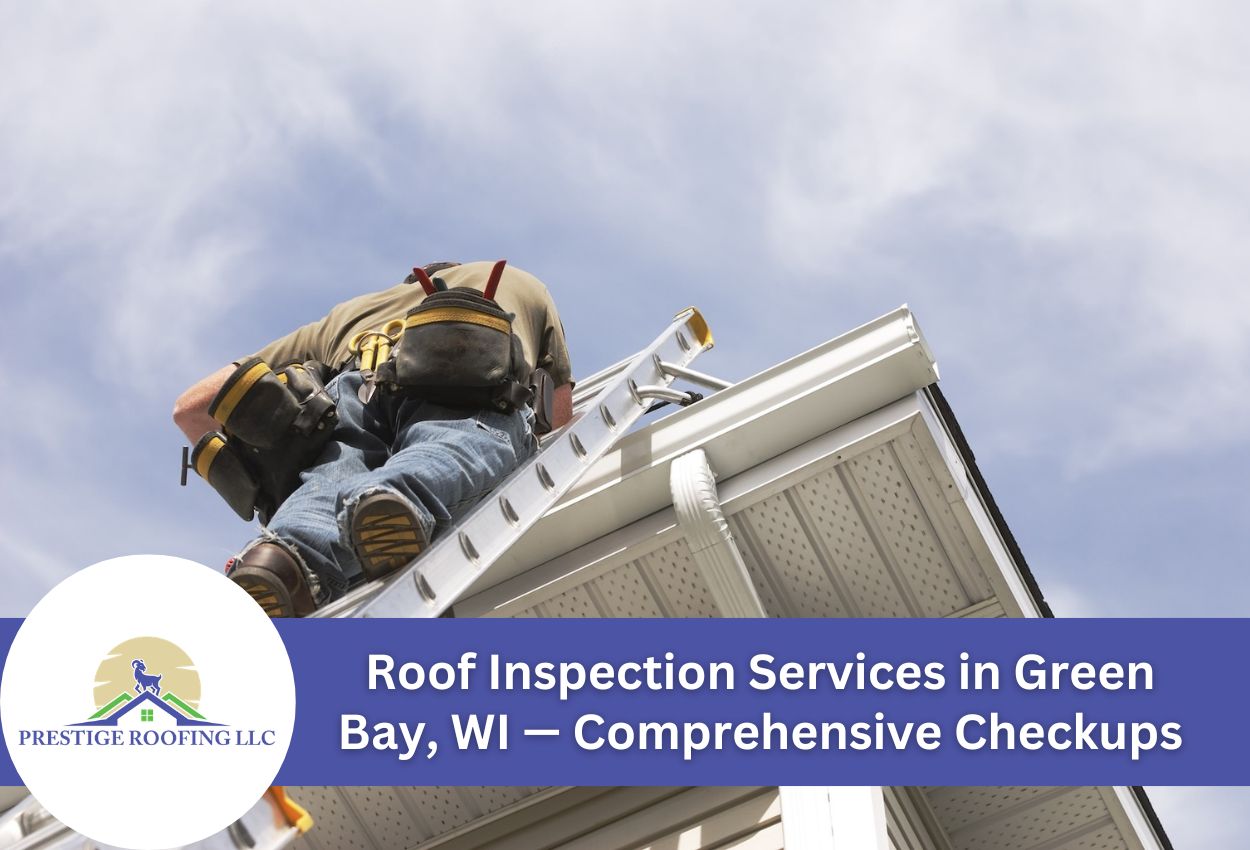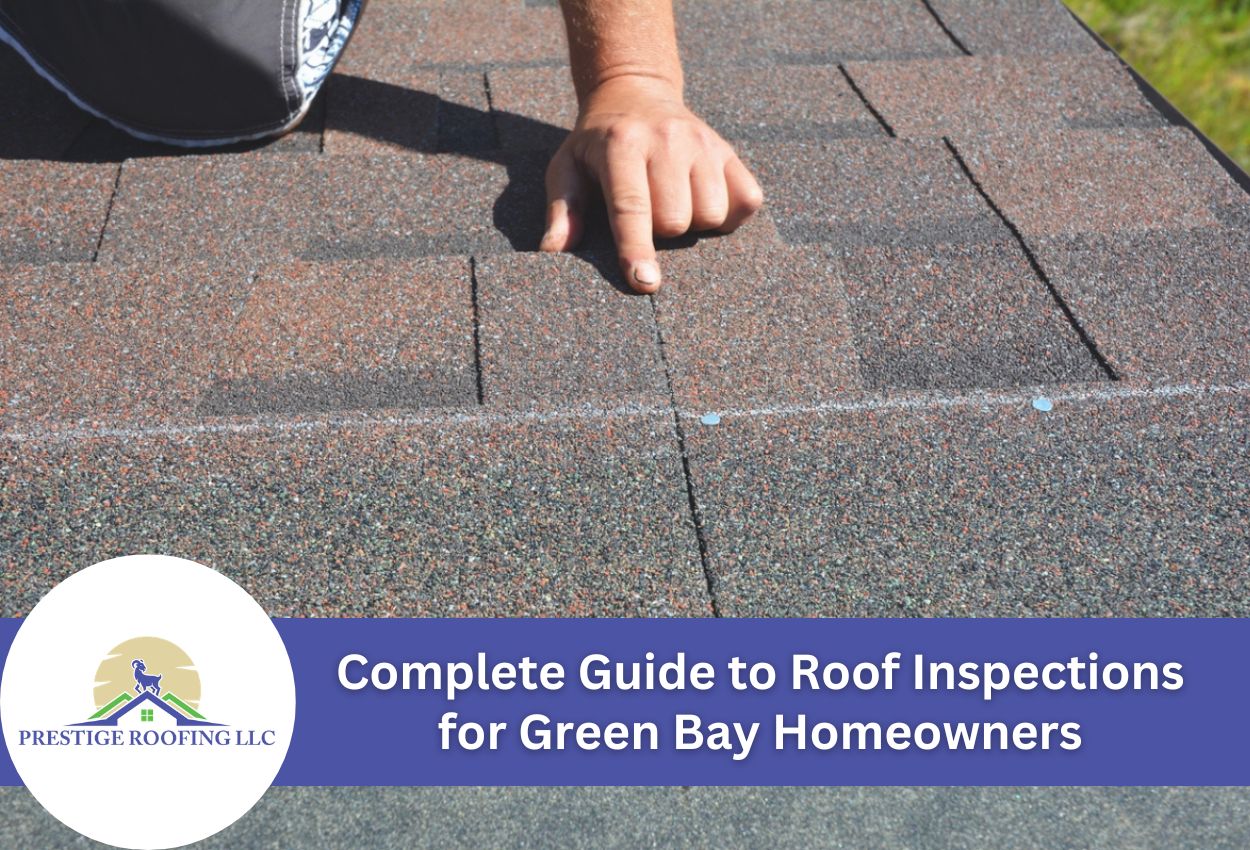
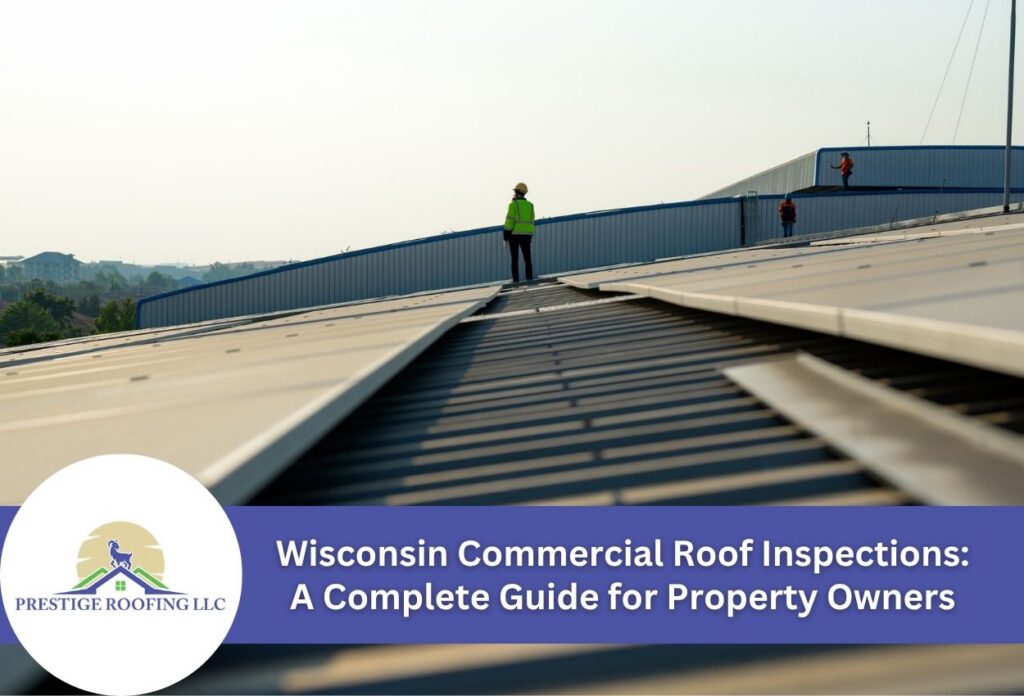

A commercial roof inspection is a structured, documented evaluation of a building’s entire roofing system, including the membrane, flashing, seams, drains, and gaps, and it covers far more ground than a typical residential inspection. On a home, an inspector checks shingles and gutters. On a commercial flat or low-slope roof, the stakes are higher: a single failed seam or clogged drain can allow water to spread across thousands of square feet of membrane before anyone notices damage inside.
Wisconsin’s climate makes regular inspections a necessity, not an option. The state averages 32 to 38 inches of precipitation annually, and winter temperatures routinely drop into the single digits and sub-zero range before summer highs push past 80 degrees Fahrenheit. That kind of temperature swing repeated hundreds of times over a roof’s life puts serious stress on seams, flashings, and fasteners. Heavy snow, spring rain, and summer UV exposure layer on additional wear that adds up over time on the flat and low-slope membrane systems common across Wisconsin’s commercial building stock.
This guide to commercial roof inspections in WI covers how often inspections should happen, what inspectors look for, the warning signs property owners can spot themselves, what inspections cost in Wisconsin, and how to take the right next step. Whether managing a retail strip, industrial facility, or office building, this is the resource to start with.
How Do Wisconsin’s Climate and Seasonal Patterns Affect Commercial Roofs?
Wisconsin’s wide temperature swing from January averages of 15 degrees to 23 degrees up to July averages of 69 degrees to 80 degrees is one of the most damaging forces a commercial roof faces, because repeated expansion and contraction break down seams, flashing, and adhesives long before visible damage appears. The state adds 32 to 38 inches of annual precipitation and average ambient humidity around 70% to 75%, meaning moisture stress adds to the thermal stress season after season. Each of Wisconsin’s four seasons creates a different failure risk, and flat or low-slope membrane roofs, the most common type of commercial roof in the state, are exposed to all of them.
| Seasonal Threat | Typical Roof Damage |
|---|---|
| Temperature changes (winter to summer) | Seam fatigue and adhesion failure on TPO and EPDM membranes |
| Snow weight accumulation | Structural stress, membrane compression, and drain blockage |
| Spring rain and snowmelt | Ponding water, flashing failure, and leaks at gaps |
| Summer UV exposure | Membrane surface degradation and thermal expansion fatigue |
| Summer thunderstorms | Impact damage, seam separation, and debris-driven drain blockage |
TPO and EPDM membranes physically shrink and expand as temperatures shift across that roughly 60-degree seasonal range. Over years of repeated dimensional movement, seams pull apart, and field adhesion weakens, often in areas that look fine from a distance. Northern Wisconsin properties near the Lake Superior snowbelt carry heavier snow and longer freeze periods than commercial buildings in Madison or Milwaukee, which means the scale of the inspection and timing for a property in Ashland or Hurley should not mirror the approach used for a building in Waukesha.
What Are the Most Common Commercial Roof Types Found in Wisconsin?
Flat and low-slope roofing systems dominate Wisconsin’s commercial building stock, covering everything from retail strip centers and office buildings to industrial warehouses and multi-unit residential properties. Older buildings commonly use built-up roofing (BUR) or modified bitumen, while newer construction leans heavily on TPO and EPDM membranes.
| Roofing System | Common Applications in WI | Typical Lifespan | Primary Inspection Focus Areas | Wisconsin-Specific Vulnerabilities |
|---|---|---|---|---|
| TPO | Retail, office, newer industrial | 15 to 25 years | Seams, flashings, drains, punctures | Seam fatigue from repeated temperature changes: UV degradation |
| EPDM | Office buildings, schools, multi-unit | 20 to 30 years | Lap seams, membrane shrinkage, edge flashings | Shrinkage and adhesion failure across wide seasonal temperature swings |
| Modified Bitumen | Retail, older commercial, institutional | 15 to 20 years | Surface granules, lap seams, blistering | Surface cracking from freeze periods: ponding water damage |
| Built-Up Roofing (BUR) | Older industrial, institutional, warehouses | 15 to 30 years | Gravel surfacing, flashing, membrane layers, drains | Heavy snow stress: moisture trapped between layers |
| Standing Seam Metal | Agricultural, institutional, sloped commercial | 30 to 50 years | Panel seams, fasteners, sealant at gaps | Ice formation at eaves: fastener corrosion from freeze-thaw exposure |
Roof type directly determines how an inspection is performed and how often it needs to happen. A standing seam metal roof on a sloped agricultural or institutional building requires a fastener-by-fastener check and seam evaluation, a completely different process than walking a flat TPO membrane on a retail strip center and probing for soft spots, failed seams, and drain blockage. BUR and modified bitumen systems on older Wisconsin commercial buildings deserve closer scrutiny because they carry more surface area where moisture can enter undetected across multiple layers.
A dedicated resource on choosing the right commercial roofing system for Wisconsin conditions covers each of these materials in greater depth, including how climate factors should shape the selection decision from the start.
How Often Should Commercial Roofs Be Inspected in Wisconsin?
Most commercial roofing professionals and industry standards recommend a minimum of two professional inspections per year in Wisconsin: one in spring after winter stress and one in fall before the freeze season, with additional inspections required after major storms. Wisconsin’s climate creates four distinct damage vectors annually: snow stress, temperature change movement, spring leaks, and summer UV exposure.
That is more than double the damage exposure found in milder climates with one or two seasonal shifts. Skipping even one scheduled inspection in Wisconsin can allow seam failures, drain blockages, or flashing separations to go undetected through an entire damage season.
| Scenario | Recommended Frequency | Rationale |
|---|---|---|
| Standard maintenance | 2 times per year (spring and fall) | Catches winter stress damage and prepares roof before freeze season |
| Post-storm (hail, high wind, heavy snow) | Within 2 to 4 weeks of the storm | Impact damage and seam separation accelerate rapidly if left unaddressed |
| Aging roof (15+ years) | 3 times per year | Older membranes and BUR systems face added failure risk each season |
| Roof under warranty | At least 1 documented inspection per year | Many manufacturer warranties require documented maintenance to stay valid |
| Pre-lease or pre-sale | 1 inspection before transaction closes | Identifies deferred damage that affects property value and liability |
Wisconsin’s climate justifies a more aggressive inspection schedule than states like Georgia or Texas, where a single seasonal shift dominates damage risk. Here, a commercial roof absorbs heavy snow from November through March, faces rapid temperature swings at seasonal transitions, takes on spring rain and snowmelt all at once, then endures months of summer UV exposure and thunderstorm impact. Each of those phases can open new failure points or make other ones worse that formed the season before.
Winter inspections in Wisconsin are limited by practicality. Full surface assessment is typically not feasible under snow cover. Winter visits focus instead on interior evidence of active leaks, visible ice damming at roof edges and drains, and any signs of snow-weight-related structural stress inside the building. A full membrane evaluation should wait until spring, once snow clears, and surface conditions are accessible. For a deeper look at what winter commercial roof maintenance involves and what to watch for between inspections, Prestige Roofing LLC covers that topic as part of its broader seasonal roofing resources.
What Does a Commercial Roof Inspector Actually Examine in Wisconsin?
A professional commercial roof inspection follows a four-part structured process: interior assessment, exterior surface evaluation, drainage and gap review, and documentation, and goes well beyond what a property manager can see from a parking lot or rooftop walkover. This commercial roof inspection checklist Wisconsin property owners can reference covers the specific items a qualified inspector examines in each category, organized so building owners know what to expect before scheduling a visit.
- Interior Assessment
- Ceiling surface moisture staining: Inspectors scan interior ceilings and upper walls for water stains, efflorescence, or active drips that indicate membrane failure or flashing separation above.
- Insulation saturation: Wet or compressed insulation loses R-value fast and adds dead weight to the roof deck. Inspectors probe suspect areas or use infrared scanning to detect moisture trapped beneath the surface.
- Roof deck deflection: Visible sagging or springiness underfoot signals structural stress, often from repeated snow accumulation during Wisconsin winters.
- Ice-dam-related leaks: Inspectors look specifically at interior ceiling surfaces near exterior walls and drain locations for evidence of water that migrated inward during freeze periods, a pattern common in northern Wisconsin where snow cover persists from November through March.
- Exterior Surface Evaluation
- Membrane seam integrity: Every field seam and edge seam on TPO and EPDM membranes is checked for pull-back, lifting, or separation, the primary failure point from Wisconsin’s roughly 60-degree seasonal temperature swing.
- Membrane cracking and buckling near seams: Inspectors look for cracking, wrinkling, or lifted sections caused by thermal stress and repeated dimensional movement over multiple seasons.
- Surface granule loss on modified bitumen: Bare or thinning surface areas expose underlying layers to UV degradation and accelerate leaks.
- Parapet wall cap flashing: Cap flashing at parapet walls is inspected for adhesion failure, open joints, and lifted sections, all common after temperature changes stress the flashing bond.
- Flashing adhesion at gaps: Every pipe boot, HVAC curb, vent, and skylight curb receives a close check for separation, cracking, or lifted edges where water can enter.
- Drainage & Gaps
- Scupper and drain flow: Each drain and scupper is checked for debris blockage and proper flow. Blocked drains cause ponding, and ponding on a flat membrane accelerates seam failure and adds structural weight.
- Counter flashing condition: Counter flashing at walls and mechanical curbs is checked for gaps, open laps, and sealant failure that allow water behind the primary membrane.
- Ponding water evidence: Staining rings or biological growth on the membrane surface indicate standing water that did not drain within 48 hours of a rainstorm.
- Documentation
- Photo log with location mapping: Every deficiency is photographed and mapped to a specific roof location so repairs can be prioritized and tracked across inspection cycles.
- Written condition report: A formal report records membrane age, observed deficiencies, and recommended repair timeline required by most manufacturer warranties to keep coverage valid.
Wisconsin inspectors specifically flag evidence of temperature-change stress membrane cracking near seams, buckled or lifted sections, and ice-dam-related leaks at interior ceilings because those failure patterns add up season after season if left unaddressed. Property managers who review this checklist before scheduling an inspection arrive with better questions and a clearer picture of what the written report should cover.
What Are the Warning Signs of Commercial Roof Damage in Wisconsin?
Some commercial roof damage is visible from the ground or inside the building, but the most expensive problems membrane blistering, seam separation, and subsurface moisture require roof access and, in many cases, professional diagnostic tools such as infrared scanning, core sampling, or moisture mapping. Property managers can catch early red flags without climbing on the roof, but those signals only tell part of the story. Interior water stains appearing after snowmelt are a high-priority warning in Wisconsin, where temperature changes drive leak patterns that move moisture through multiple roof layers before it ever shows on a ceiling.
| Signs Visible from Ground or Interior | Signs Requiring Roof Access |
|---|---|
| Water stains or discoloration on ceiling tiles | Membrane blistering or bubbling across field areas |
| Sagging ceiling sections or soft spots underfoot on upper floors | Seam separation on TPO or EPDM membrane edges |
| Daylight visible through the roof deck from inside | Flashing gaps at parapet walls, curbs, or gaps |
| Blocked or overflowing drains visible from ground level | Granule loss on modified bitumen surface layers |
| Ice dams forming at eaves or drain locations during winter | Surface ponding that persists more than 48 hours after rain |
Wisconsin’s climate makes both categories more urgent than in moderate climates. Ice dams at eaves signal that heat loss and snowmelt are pushing water under edge flashing, a pattern that shows up on ceilings near exterior walls weeks after the actual leak began. Ponding water is especially damaging on flat membrane roofs here because spring thaw delivers large water volumes in short periods, adding both structural weight and accelerated seam stress at the same time.
Delayed response to any of these warning signs allows damage to spread across additional membrane area, saturate insulation, and compromise the roof deck, all of which drive repair costs higher than an early intervention would have required.
What Should You Expect During a Commercial Roof Inspection in Wisconsin?
A commercial roof inspection on a 10,000 square foot flat membrane roof typically takes 2 to 4 hours from start to finish, including both the interior walkthrough and the rooftop evaluation. Knowing what to expect during a commercial roof inspection in Wisconsin removes a lot of uncertainty, especially for building owners scheduling their first professional assessment.
The process starts before anyone steps on the roof. A qualified inspector will review available documentation during the initial scheduling call: existing warranty records, prior inspection reports, maintenance logs, and any insurance claim history. That background shapes where the inspector focuses attention on-site and helps establish a baseline for comparing current conditions against past findings.
On-Site Assessment
On inspection day, the inspector begins inside the building. Interior access is needed to check ceilings, upper walls, and mechanical spaces for staining, insulation saturation, and roof deck deflection. Building occupants generally do not need to evacuate, but the inspector will need access to mechanical rooms, storage areas near the roofline, and any spaces directly below suspected problem zones. Notifying tenants in advance is recommended if ceiling tiles need to be lifted or attic hatches opened.
The rooftop portion follows. The inspector walks the full membrane surface, checks every seam, photographs all gaps and flashing conditions, and evaluates drainage outlets for blockage or ponding evidence. Every deficiency is photographed and mapped to a specific roof zone so the findings are traceable rather than vague.
The Written Report
The deliverable from a professional inspection is a written report that includes annotated photographs, condition ratings by roof zone, an estimated remaining service life for the membrane, and a prioritized list of recommended repairs or maintenance actions. In Wisconsin, this report is frequently required for insurance claims, lease renewals, and manufacturer warranty compliance, so the format and detail level matter, not just the findings themselves. A report that simply says “minor wear observed” does not meet the documentation threshold most insurers and warranty administrators expect.
Inspectors working on Wisconsin buildings also flag seasonal context in the report, noting whether findings are consistent with temperature-change stress, snowmelt leak patterns, or UV degradation so property managers understand not just what failed, but why, and when it’s most likely to get worse.
How Much Does a Commercial Roof Inspection Cost in Wisconsin?
Commercial roof inspection costs in Wisconsin typically range from $200 to $1,500+ depending on roof size, inspection type, and site complexity. Commercial roof inspection cost in Wisconsin varies because a 5,000 sq. ft. single-story retail building requires far less time, equipment, and documentation than a 50,000 sq. ft. multi-level industrial facility with rooftop HVAC units, skylights, and multiple drainage zones. Rural and northern Wisconsin properties may also see higher costs due to travel distance and limited local inspector availability.
| Inspection Type | Typical Cost Range in Wisconsin | What Is Included |
|---|---|---|
| Basic visual inspection | $200 to $400 | Surface walkthrough, drain check, basic photo log, verbal findings |
| Full professional inspection | $300 to $700 | Full interior and rooftop assessment, written condition report, annotated photos, repair recommendations |
| Infrared/thermal moisture scan add-on | $400 to $900 additional | Subsurface moisture mapping, wet insulation identification, thermal image documentation |
| Post-storm insurance inspection | $300 to $600 | Damage documentation for claims, photo log, written report meeting insurer standards |
| Annual maintenance inspection contract | $500 to $1,200 per year | Two scheduled inspections annually, condition tracking across seasons, priority scheduling |
Complexity drives cost more than square footage alone. Access requirements such as rooftop equipment clearance, interior mechanical room access, or multi-story building logistics add time and documentation depth that basic inspections do not cover. An annual maintenance contract typically costs less per visit than two separate single inspections and delivers better condition tracking across Wisconsin’s seasonal swings.
A $300 to $700 professional inspection can identify issues that, left unaddressed, may result in $10,000 to $50,000+ in commercial roof repair or replacement costs, making inspection one of the highest-return decisions a commercial property owner can make. Prestige Roofing LLC works with Wisconsin commercial property owners across building types and roofing systems to deliver inspections that meet insurer, warranty, and property management documentation standards.
Is It Worth Getting a Professional Inspection or Can You Do It Yourself?
A professional inspection is the right call for any roof showing damage, aging past 10 years, or coming off a hard Wisconsin winter, but a few specific self-assessment tasks are worth doing between scheduled inspections. These ground-level and interior checks are supplements to professional inspections, not replacements for them.
When a Self-Assessment May Be Sufficient
- Routine ground-level visual checks: Walk the building perimeter once a month and scan the roofline from ground level for visible sagging, displaced flashing, or debris buildup near drain areas.
- Post-storm cursory review: After any storm, do a quick ground-level pass within 24 hours to check for visible membrane displacement, debris on the roof, or clogged drains.
- Interior ceiling monitoring after rain or snowmelt: Check ceilings in all interior spaces after heavy rain or significant snowmelt. New stains, soft spots, or discoloration are early signals worth logging by date and location.
- Keeping drain areas clear: Remove visible debris from drain covers and gutters at least twice per season to reduce ponding risk on flat membrane surfaces.
When You Must Hire a Professional
- Suspected structural damage: Any sign of roof deck deflection, sagging interior ceilings, or ponding water that persists more than 48 hours after rain requires a professional assessment, not a ground-level scan.
- Pre-purchase or pre-lease due diligence: A written professional inspection report is the only defensible documentation standard for commercial real estate transactions.
- Warranty compliance requirements: Most membrane manufacturers require documented professional inspections at scheduled intervals to keep coverage active.
- Insurance claim documentation: A post-storm insurance inspection in Wisconsin typically costs $300 to $600 and produces the photo log and written report most insurers require before processing a claim.
- Aging roofing systems or recent gap work: Any roof 10+ years old, or any system where rooftop HVAC units or new gaps were recently installed, needs trained eyes and moisture diagnostic tools, not a visual pass from the parking lot.
In Wisconsin, professional inspections are especially important after winters with heavy snow accumulation or late-season ice storms. The damage patterns that result from extreme seasonal temperature changes and moisture traveling through multiple roof layers before appearing on a ceiling often cannot be identified without infrared scanning or core sampling. A property owner who is unsure of roof condition for any reason should schedule a professional inspection before the next seasonal weather cycle begins.
How Does Wisconsin Weather and Regulation Affect Inspection Timing and Compliance?
Commercial roofing projects in Wisconsin must comply with the state’s uniform commercial building code, though local authorities typically issue permits. While the Wisconsin DSPS Dwelling Contractor registration applies to residential construction, commercial buildings operate under state-adopted IBC standards where designated local building departments enforce compliance and review plans. That distinction matters for property owners scheduling inspections tied to a permit-required repair or roof replacement.
Compliance-Driven Inspection Requirements
Beyond code, commercial roof inspections are frequently required by outside parties. Commercial lease agreements often include roof maintenance provisions that require documented inspections at set intervals. Lenders, investors, and insurance carriers conducting due diligence on Wisconsin commercial properties routinely request a current written inspection report before closing, renewing coverage, or processing a claim. A professional inspection is both a maintenance tool and a formal compliance document, and the written report must meet the documentation standard the requesting party expects, not just confirm the roof looks acceptable.
Warranty compliance adds another layer. Most TPO and EPDM membrane manufacturers require documented annual or biannual inspections by a qualified contractor to keep coverage active. Missing even one scheduled inspection cycle can void manufacturer warranty coverage, a meaningful financial risk given that membrane replacement on a mid-size Wisconsin commercial building can run well into five figures.
Best Timing for Wisconsin Inspections
Late spring May through June and early fall August through September are the most practical windows for full commercial roof evaluations in Wisconsin. During those periods, membrane surfaces are accessible, temperatures allow infrared scanning to read subsurface moisture accurately, and drainage systems can be tested while conditions are dry. Winter inspections are limited in job scale because snow cover obscures the membrane surface and freezing temperatures restrict certain diagnostic methods.
Midsummer heat can affect membrane pliability during hands-on assessment, making late-summer scheduling preferable to peak July heat. Property managers who align inspection scheduling with these two seasonal windows get the most complete findings and give contractors enough lead time to complete any recommended repairs before the next hard season arrives.
How Can Regular Inspections Extend the Life of a Commercial Roof in Wisconsin?
A TPO or EPDM roof rated for 20 to 25 years can fall short of 15 years without documented maintenance or exceed 25 years when biannual inspections and fast minor repairs are part of a consistent plan. That gap in service life represents a significant difference in replacement cost timing for any Wisconsin commercial property owner.
| Scenario | 10-Year Cost Estimate | Outcome |
|---|---|---|
| Biannual inspections plus minor repairs over 10 years | $5,000 to $15,000 cumulative | Roof reaches or exceeds designed service life: replacement deferred |
| No maintenance: deferred repairs lead to full replacement | $80,000 to $200,000+ for one replacement | Roof fails before rated lifespan: major capital expenditure required |
| Small seam or flashing repair caught in spring | $500 to $2,000 | Damage contained: insulation and roof deck protected |
| Same failure missed through a Wisconsin winter | $20,000+ remediation | Moisture reaches insulation and roof deck: possible mold and interior damage |
Wisconsin winters make undetected roof failures expensive fast. A small seam gap or flashing failure that goes unnoticed through months of snow, ice, and temperature changes allows moisture to move through insulation layers and into the roof deck. What a trained inspector would flag as a $500 to $2,000 repair in spring can become a $20,000+ remediation project by fall once roof deck rot, mold, and interior damage are factored in.
Spending $5,000 to $15,000 on inspections and minor repairs over a decade is a fraction of the $80,000 to $200,000+ cost of a single full commercial roof replacement, and that math holds across nearly every type of roof common in Wisconsin. For facility managers who want to go deeper on structured preventive maintenance programs and long-term budget planning, a related resource covering commercial roof maintenance plans in Wisconsin covers the full framework in detail. Prestige Roofing LLC helps Wisconsin commercial property owners build and follow inspection schedules that protect both the roofing system and the budget behind it.
What Questions Should You Ask a Commercial Roofing Contractor in Wisconsin Before Scheduling an Inspection?
Ask at least these 8 questions before hiring any Wisconsin commercial roofing contractor for an inspection: the answers will separate qualified professionals from those without the documented experience your property requires.
- Are you licensed and insured for commercial work in Wisconsin? Ask for a current certificate of insurance showing general liability and workers’ compensation coverage. A reputable contractor provides this without hesitation before any site visit is scheduled.
- How many commercial membrane roofs have you inspected in Wisconsin? Experience with TPO, EPDM, and modified bitumen systems in a Wisconsin climate is different from general roofing experience. Ask for a number, not a vague answer.
- Do you provide a written inspection report with photographs? A professional report should document every finding with labeled photos, condition ratings, and prioritized repair recommendations, not a one-page summary with a cost estimate attached.
- Do you use infrared scanning or moisture detection tools? Infrared thermography and electronic moisture scanning can identify subsurface leaks that a visual pass will miss entirely, especially after a Wisconsin winter with heavy snow accumulation or repeated temperature changes.
- What Wisconsin-specific damage patterns do you look for? A qualified inspector should immediately reference ice dam formation, seam stress from temperature changes, drain freeze-up, and membrane contraction, not generic storm damage language.
- How quickly will you deliver the written report after the inspection? Most reputable commercial inspectors turn around a full written report within 3 to 5 business days: any longer makes post-storm or pre-lease documentation difficult to use in time.
- Is the inspection fee applied toward repair costs if you hire the same contractor? Many contractors credit the inspection fee, often $300 to $600 for a standard commercial roof, toward any future repair work, which is worth confirming before signing anything.
- Can you provide references from similar commercial clients in Wisconsin? Ask specifically for references from flat or low-slope membrane roof clients in the state, not residential work or projects in other climates.
Wisconsin’s commercial roofing market includes both large regional firms and smaller local contractors. Company size is not the deciding factor: documented experience with commercial membrane systems and Wisconsin seasonal inspection protocols is. A qualified inspector will not pressure a property owner into immediate repair commitments: the report should give the owner clear, prioritized information to make decisions on their own timeline.
Commercial Roof Inspection Checklist for Wisconsin Property Owners
This commercial roof inspection checklist for Wisconsin property owners is built around four seasonal checkpoints. Use it to monitor conditions between professional inspections, not as a replacement for them. Property managers who actively track these items reduce the risk of emergency repairs and build the documentation record that insurers, lenders, and warranty administrators require.
Pre-Winter Checkpoint: October to November
- Clear all roof drains and scuppers: Remove debris before the first freeze; blocked drains under heavy snow are one of the most common causes of ponding-related membrane failure on Wisconsin flat roofs.
- Photograph all seams, flashings, and gaps: Document current condition with dated photos before snow covers the surface for 3 to 5 months.
- Check interior ceilings for staining or soft spots: New water marks appearing before winter often signal a seam or flashing failure that will get worse under snow accumulation.
- Inspect membrane surface for open laps or blisters: Any open seam wider than 1/8 inch should be flagged for repair before temperatures drop and materials become brittle.
- Confirm insulation access hatches and curbs are sealed: Gaps around rooftop equipment curbs allow cold air leaks and accelerate interior moisture buildup.
Post-Winter/Spring Checkpoint: March to May
- Scan interior ceilings within 2 weeks of snowmelt: Spring is the highest-risk window for revealing leaks that developed silently through winter temperature changes.
- Inspect drains for freeze damage and debris: Drains that backed up under ice often show cracking or displacement that needs repair before spring rain season.
- Walk the membrane surface for punctures or tears: Snow removal equipment and foot traffic during the winter months frequently leave damage that is invisible until the surface is clear.
- Check all flashing terminations and seams: Repeated temperature changes from October through March stress seam adhesion; look for lifting edges or separation at transitions.
- Document any standing water 48 hours after a rainstorm: Ponding that persists beyond 48 hours indicates a drainage problem that should be logged and addressed before summer storms arrive.
Mid-Summer Checkpoint: July
- Inspect UV-exposed membrane surfaces during early morning hours: July UV intensity in Wisconsin accelerates surface oxidation: look for chalking, cracking, or color change on TPO and modified bitumen surfaces.
- Check rooftop HVAC units and gap seals: Thermal expansion in summer heat stresses seals around equipment curbs and pipe boots: any gap wider than 1/16 inch warrants documentation.
- Log any interior humidity or condensation complaints from tenants: Unexplained interior moisture in July often points to compromised insulation layers from earlier leaks.
Post-Storm Checkpoint: After Any Bad Hail, Wind, or Heavy Rainstorm
- Conduct an interior ceiling scan within 24 to 48 hours: New staining or soft spots that appear within two days of a storm are strong indicators of active membrane or flashing failure.
- Photograph the surface of the roof and any visible impact marks: Hailstorms producing stones 1 inch or larger can damage membrane surfaces in ways that are not visible to the naked eye; dated photos support insurance claims.
- Check drains and gutters for granule loss or debris accumulation: Heavy granule runoff after a storm on modified bitumen or built-up roofing signals surface wear that shortens remaining service life.
- Inspect all flashings at parapets and wall transitions: High winds commonly lift or separate flashing terminations; document any displacement immediately.
Log every checklist entry with the date, weather conditions, and photos. A written maintenance record with dated photos strengthens insurance claims, supports manufacturer warranty compliance, and gives roofing contractors a clear condition history to work from during professional inspections. Prestige Roofing LLC can review your documented findings and determine which items require immediate professional attention.
Ready to Schedule a Commercial Roof Inspection in Wisconsin?
Catching roof damage early before it becomes a $10,000+ repair starts with scheduling a professional inspection at the right time. Prestige Roofing LLC works with commercial property owners across Wisconsin and understands the seasonal inspection requirements that flat and low-slope roofs in this climate demand, from post-winter membrane checks to pre-storm documentation.
Spring and early fall inspection windows fill fast: waiting until damage is visible almost always costs more than catching it early. Contact Prestige Roofing LLC to book your inspection or request a written quote.
Schedule your free roof inspection.
Not ready to schedule? Learn more about commercial roofing inspections in Wisconsin.