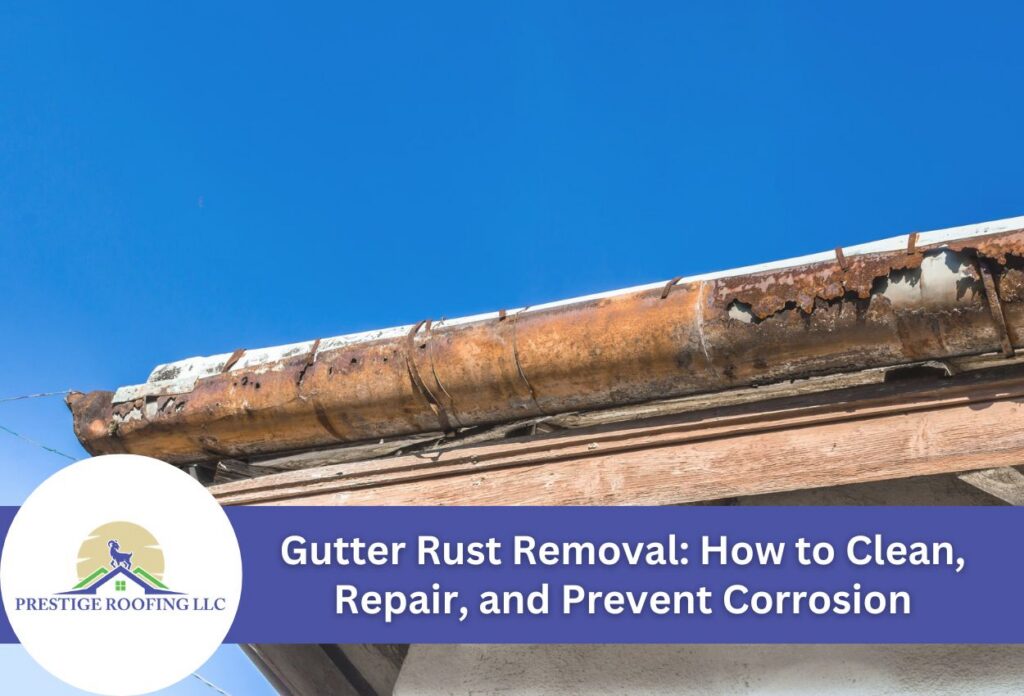

Steel gutters in Green Bay can show visible rust within 3 to 5 years without regular maintenance, and the region’s 30 to 35 inches of annual precipitation, combined with summer humidity averaging 70% to 80%, creates nearly ideal conditions for corrosion to develop fast. Once rust starts, it spreads quickly if left alone.
Two things speed up gutter rust faster than anything else in Brown County: freeze-thaw cycles and trapped debris. Water expands when it freezes, opening tiny cracks in protective coatings. Wet leaves and gunk sitting in gutters hold moisture against the metal for weeks at a time. Together, these conditions can turn surface rust into through-holes and active leaks within just 1 to 3 seasons.
This article covers DIY rust removal steps, which products work best on steel and aluminum gutters, and the signs that damage has gone far enough to need professional repair or a full gutter replacement.
*Please note, price ranges listed in this article may not reflect the final cost of your project. Prices are subject to change based on various factors such as local labor rates, material quality, and more. All costs established in this article are rough estimates based on average industry rates.
Which Gutter Materials Rust and How Quickly Do They Deteriorate?
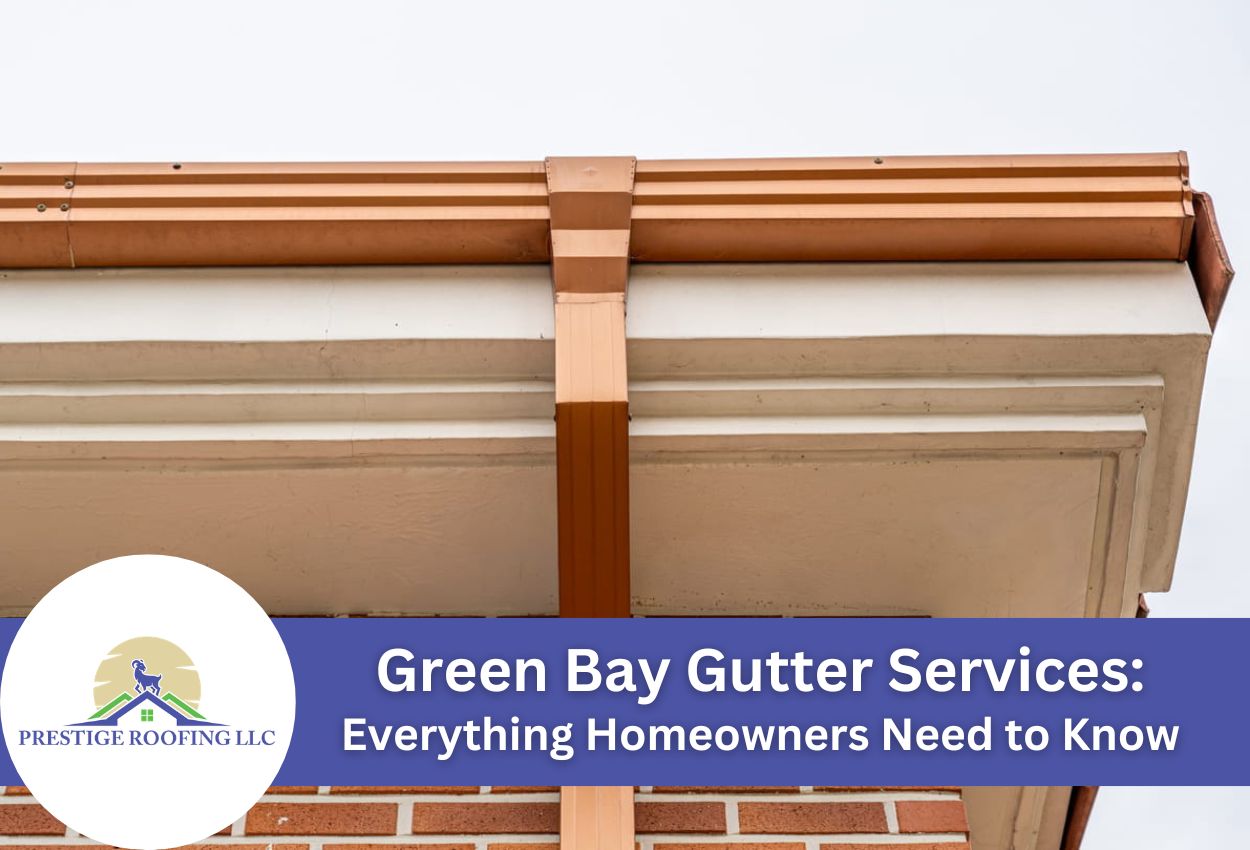
Steel gutters carry the highest rust risk of any common gutter material, while aluminum gutters do not rust at all, though that difference matters less if the treatment approach is wrong for the material on hand.
| Material | Rust Susceptibility | Avg. Lifespan in Freeze-Thaw Climates (years) | First Rust Appearance (years) | Relative Cost per Linear Foot ($) |
|---|---|---|---|---|
| Aluminum | Low | 20 to 30 | N/A oxidation starts at 5 to 10 | $4 to $9 |
| Galvanized Steel | Medium (zinc coating delays rust) | 20 to 25 | 10 to 15 (after zinc degrades) | $5 to $11 |
| Steel (uncoated/bare) | High | 10 to 15 | 3 to 5 | $3 to $7 |
Aluminum gutters won’t rust, but they do develop oxidation and surface pitting over time, which looks similar to rust and is often mistaken for it. Using rust-specific treatments on aluminum can damage the metal rather than help it. Galvanized steel holds up well early on, but once the zinc coating wears through, typically around the 10 to 15 year mark, rust spreads fast.
Many mid-20th century homes in Green Bay were built with galvanized steel gutters, meaning a large share of local homeowners are already past that protective coating window. If a galvanized steel gutter system on a Green Bay home is more than 15 years old, active rust is likely present even if it isn’t visible from the ground yet.
How Do You Remove Rust From Gutters?
The full DIY rust removal process for a single gutter run takes 2 to 4 hours on a single-story home, and it should only be done when temperatures are at or above 40 degrees Fahrenheit, which in Green Bay means April through May is the best window for this work.
- Set up safely before starting. Place a stable ladder on level ground and wear gloves, eye protection, and a dust mask. Rust particles and chemical converters are both hazardous to the skin and eyes.
- Clear all debris from the gutter. Remove leaves, dirt, and standing gunk by hand or with a stiff brush before treating any rust. Debris left behind blocks chemicals from reaching the metal surface.
- Sand or wire-brush all rust spots. Use 80 to 120 grit sandpaper or a wire brush attachment on a drill. Sand until bare metal shows and loose rust flakes are gone. This step exposes the surface so the chemical treatment can bond directly to the metal.
- Apply a phosphoric acid-based rust converter. Products in the Rust-Oleum or Corroseal lines are good examples. These use phosphoric acid to chemically neutralize rust and convert it into a stable black primer layer, making them more effective than sanding alone on pitted or deeply corroded surfaces. Apply evenly and let it dwell for 15 to 30 minutes per product instructions.
- Rinse the treated areas thoroughly. Use a garden hose to flush away any residue after the dwell time is complete. Check that the water runs clear before moving to the next step.
- Allow the surface to dry fully. Wait at least 24 hours before sealing. Any trapped moisture under the sealant will cause it to fail fast.
- Seal with gutter sealant or rust-inhibiting primer. Apply a gutter-rated sealant or metal primer over all treated areas to prevent new moisture from reaching bare metal. Focus on seams and joints where rust almost always starts.
Temperatures below 40 degrees, common in Green Bay from November through March, prevent both sealants and rust converters from curing properly, so waiting for spring is not optional. Skipping the phosphoric acid converter step and only sanding leaves corrosion active beneath the surface, meaning rust returns within one season on pitted gutters.
Should You Repair Rusty Gutters or Replace Them Entirely?
Repair makes sense when rust affects less than 20% of the gutter run, holes are under 1 inch in diameter, and the system is fewer than 15 years old. Beyond those thresholds, replacement is the smarter call.
- Surface rust and isolated spots: Homeowners can handle these with a patch kit and rust converter if the corroded area covers a small portion of the run and the metal around it is still structurally sound. This is a reasonable DIY fix when caught early.
- Minor pinholes under 1 inch: A tube of gutter sealant or a metal patch kit from any hardware store can seal these in under an hour. This is the upper limit of what a DIY approach should address.
- Rust covering more than 30% of the gutter surface: At this level, patching becomes a temporary fix at best. When rust spreads across more than 30% of the run, a full replacement will cost less over 5 to 10 years than repeated repairs.
- Holes larger than 1 inch, sagging sections, or seam separation: These require a licensed Green Bay roofing contractor. Sagging means the hangers or fascia boards behind the gutter are compromised, something a patch kit cannot fix.
- Fascia board rot behind the gutter: This is a contractor-only repair. Rotted fascia boards must be replaced before any new gutter system is installed, or the new gutters will fail within 2 to 3 seasons. Learn more about fascia board and soffit repair and replacement services that address this issue directly.
- Galvanized steel systems installed before 1990: Brown County homes with gutters that are 35 or more years old are strong replacement candidates regardless of surface appearance. The zinc coating on systems that old provides negligible remaining protection, and no surface treatment changes that underlying reality.
If the gutter system is 20 or more years old and showing active rust in multiple locations, contact Prestige Roofing LLC for an inspection before spending money on repairs that may only delay the same conversation by one or two seasons.
What Is the Best Way to Prevent Gutter Rust After Cleaning?
Cleaning gutters twice a year, once in late April to early May after snowmelt and once in late October before freeze-up, is the minimum schedule Green Bay homeowners need to stop debris-driven moisture from accelerating rust on steel systems. Wet leaves and compacted debris can hold standing water against metal for weeks at a time. That constant contact is one of the fastest ways to strip protective coatings and start the corrosion process.
- Apply a rust-inhibiting sealant rated to -20 degrees: After every cleaning, inspect and reapply sealant along all seams, joints, and end caps. Sealants rated for temperatures down to -20 degrees hold up through Green Bay winters without cracking or pulling away from metal during freeze-thaw cycles.
- Install micro-mesh gutter guards: Manufacturer claims for micro-mesh styles rate debris reduction at 70% to 90%, which directly reduces how often moisture-trapping material sits against the gutter surface between cleanings. Fewer clogs mean less standing water and slower coating wear.
- Reapply rust-inhibiting primer every 3 to 5 years: This single step is what separates gutters that last from ones that don’t. Reapplying a rust-inhibiting primer or sealant on a 3 to 5 year cycle extends steel gutter service life by an estimated 5 to 8 years, which, over a 30-year homeownership period, can reduce the number of full replacements from three cycles down to two.
Gutter rust prevention after cleaning is not a one-time fix. It is a maintenance pattern. Inspect all seams and end cap coatings annually, and address any coating gaps before the first hard freeze arrives.
How Much Does Gutter Rust Removal Cost Compared to Full Replacement?
DIY rust treatment costs as little as $30 to $80 in materials and delivers the lowest cost-per-year outcome of any option, but only when rust is caught before it spreads to neighboring sections.
| Option | Average Cost Range (Green Bay Single-Family Home) | Estimated Lifespan Added (years) | Cost per Year of Extended Service Life ($) |
|---|---|---|---|
| DIY Rust Treatment | $30 to $80 | 3 to 5 | $6 to $27 |
| Professional Rust Treatment | $150 to $300 | 4 to 6 | $25 to $75 |
| Partial Gutter Repair | $200 to $500 | 5 to 8 | $25 to $100 |
| Full Seamless Aluminum Replacement | $1,000 to $2,500 | 20 to 30 | $34 to $125 |
The numbers make the timing argument clear. A $50 DIY fix applied before structural damage sets in is the most cost-efficient option available. Delaying that same treatment by even one Green Bay freeze-thaw season typically doubles the affected area, turning a minor rust spot into a $300 to $500 professional repair job. Early DIY intervention at $6 to $27 per year of added life costs four times less annually than waiting for a professional repair to become necessary. Full replacement delivers the longest overall lifespan, but it is rarely the right first move when rust is still isolated to a small section of the run.
Ready to Tackle Gutter Rust Removal? Here’s How a Green Bay Contractor Can Help.
If gutters on your home are showing rust across more than 20% of the surface or the system is 15 to 20 years old or older, a professional roof and exterior inspection before April slips away is the fastest way to avoid paying $1,000 to $2,500 for a full replacement that early treatment could have prevented. Prestige Roofing LLC serves homeowners across Green Bay, WI, and the surrounding Brown, Outagamie, Oconto, and Door Counties, and the April to May window is the best time to get eyes on a steel gutter system before another wet season sets in.
Waiting one more freeze-thaw season could turn a cheap fix into a $500 repair job.
Get your free gutter estimate.
Not ready to schedule? Learn more about gutter rust removal and repair services.