When Hail Strikes Your Metal Roof: What Every Green Bay Homeowner Should Know
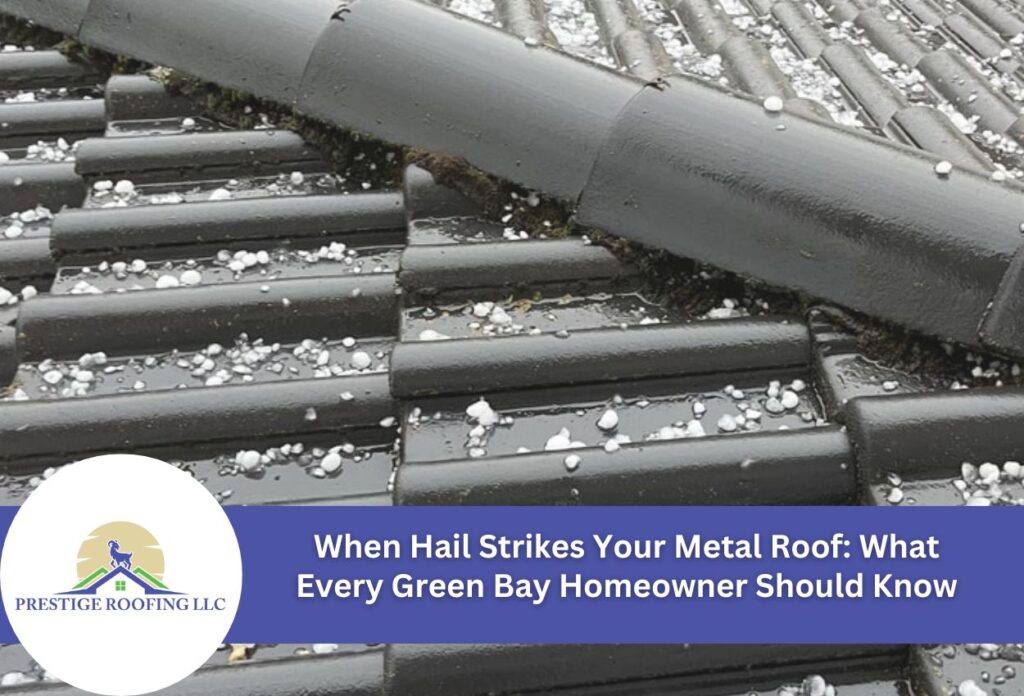

Metal roof hail damage represents a significant concern for Wisconsin homeowners, particularly during the state’s active storm season. Green Bay experiences frequent hailstorms between April and August, with ice pellets ranging from pea-sized to golf ball diameter, capable of causing substantial property damage.
Hailstorms develop when strong updrafts in thunderstorms carry water droplets high into freezing atmospheric layers. These droplets accumulate ice layers as they cycle through the storm system, eventually becoming too heavy for the updrafts to support. Wisconsin’s geographic location places it directly in the path of severe weather systems that produce these destructive hailstorms annually.
Metal roofing has gained popularity among Green Bay homeowners due to its durability, energy efficiency, and longevity. These roofing systems typically withstand severe weather conditions better than traditional asphalt shingles. However, metal roof storm damage can still occur during intense hailstorms, particularly when hailstones exceed 1 inch in diameter.
A dented metal roof may not always show obvious signs of damage from ground level. Understanding how hail impacts different roofing materials helps homeowners recognize when a professional metal roof inspection becomes necessary. Prompt identification of storm damage ensures proper hail damage repair and prevents minor issues from developing into expensive structural problems.
Spotting Hail Damage on Your Metal Roof
Identifying metal roof hail damage requires understanding both visible and subtle indicators that storms leave behind. Many homeowners can spot obvious signs from ground level, while other damage requires professional assessment to detect properly.
The most apparent visual indicators include circular dents scattered across metal panels, particularly on roof sections facing the storm’s direction. These dents may appear as small dimples or larger depressions, depending on hailstone size and impact velocity. Displaced or loose panels often shift during severe weather, creating gaps that expose underlying materials. Paint damage frequently accompanies impact points, leaving bright metal spots visible against darker colored roofing materials.
Less obvious metal roof storm damage signs demand closer examination by roofing professionals. Loose fasteners represent a common issue that compromises roof integrity without creating immediately visible problems. Screws and bolts may back out slightly under repeated impacts, reducing their holding power while remaining partially secured. Compromised seals around gaps, joints, and panel overlaps allow leaks to form, which leads to long-term structural issues.
Even hail-resistant roofing material can sustain damage during severe storms. Professional metal roof inspection reveals problems invisible from ground level, including stress fractures, weakened attachment points, and damaged flashing systems. A thoroughly dented metal roof may require comprehensive hail damage repair to restore full weather protection and prevent future complications that develop from seemingly minor storm impacts.
Immediate Steps After Hail Damages Your Metal Roof
When hailstorms subside, homeowners must prioritize safety while protecting their property from additional damage. Your priority should be to stay indoors until conditions completely stabilize and to avoid any attempts to climb onto a potentially compromised roof structure.
Safety precautions include checking for immediate hazards such as loose metal panels, damaged gutters, or debris scattered around the property perimeter. Windows, skylights, and other roof gaps require inspection for cracks or breaks that could allow for leaks to form. If water begins entering the home, placing buckets or tarps provides temporary protection while professional help arrives.
Documentation should begin immediately with photographing all visible metal roof hail damage from multiple angles and distances. Pictures should capture both close-up views of individual dents and wider shots showing the overall scope of damage across roof sections. Ground-level photographs of gutters, downspouts, and any fallen debris help establish the storm’s intensity for insurance documentation.
Contacting insurance providers should occur within 24 hours of storm impact, as many policies have specific reporting timeframes for weather-related claims. Professional metal roof inspection becomes essential when damage appears extensive or when homeowners cannot safely assess the full extent of problems from ground level.
Professional Inspection Process for Metal Roof Storm Damage
Trained roofing professionals conduct systematic evaluations to assess metal roof hail damage accurately and determine appropriate repair strategies. These comprehensive inspections go far beyond what homeowners can observe from ground level, utilizing specialized knowledge and equipment to identify all forms of storm-related damage.
During a thorough metal roof inspection, professionals examine every panel for dents, cracks, and deformation patterns that could indicate the severity of the hail impact. Inspectors check fastener integrity by testing each screw and bolt for proper tension and secure attachment to underlying structures. They evaluate flashing systems around chimneys, vents, and roof gaps where storm damage frequently occurs but remains hidden from casual observation.
Professional inspectors assess whether existing hail-resistant roofing material performed as expected during the storm. They document granule loss on coated panels, measure dent depths and distribution patterns, and photograph all damage for detailed repair estimates and insurance documentation. Thermal imaging equipment may reveal moisture infiltration that indicates compromised seals or panel joints.
The evaluation process determines whether a dented metal roof requires partial repairs or complete replacement based on the extent of the damage and structural integrity. Inspectors categorize damage severity, prioritize immediate repair needs, and develop comprehensive hail damage repair plans that address both visible problems and potential long-term issues.
Professional assessment ensures that all metal roof storm damage receives proper attention, preventing minor problems from developing into expensive structural failures that compromise home protection and safety.
Repair Options for Your Dented Metal Roof
Professional contractors employ various techniques to restore metal roofing systems damaged by hailstorms, with repair methods depending on damage severity and panel condition. Understanding available options helps homeowners make informed decisions about restoring their roof’s protective capabilities.
Minor dent repair techniques prove effective for small surface impacts that don’t compromise panel integrity. Skilled technicians use specialized tools to carefully reshape metal panels, working from the underside when possible to restore original contours. This process, known as panel reformation, works best on shallow dents smaller than quarter-sized areas. Heat application combined with gentle pressure gradually returns panels to their original shape without creating stress fractures or weakening the metal structure.
Surface coating restoration addresses paint damage and exposed metal areas where hail impacts have removed protective finishes. Professional-grade primers and topcoats match existing colors while providing corrosion resistance that extends roof lifespan. Small punctures or cracks receive specialized sealants designed for metal roofing applications.
Full panel replacement becomes necessary when hail damage repair cannot restore structural integrity or weather resistance. Deep dents, multiple impact points, or cracked panels require complete removal and installation of matching materials. This process involves carefully removing damaged sections while preserving surrounding panels, installing new materials that match existing specifications, and ensuring proper sealing at all connection points.
Professional contractors determine the most appropriate metal roof storm damage solutions based on inspection findings, material availability, and long-term performance expectations for the restored roofing system.
Choosing Hail-Resistant Materials for Long-Term Protection
Selecting appropriate metal roofing materials significantly impacts a roof’s ability to withstand future hailstorms and minimize damage from severe weather events. Different metal types exhibit varying levels of resistance to hail impacts, making material selection a critical factor in long-term roof performance.
Steel roofing systems, particularly those with thicker gauges, provide excellent hail resistance due to their structural strength and flexibility. Steel panels with a 26-gauge thickness resist denting better than thinner alternatives, while 24-gauge materials offer superior protection for areas experiencing frequent severe weather. Aluminum roofing, though lighter weight, requires thicker profiles to achieve comparable hail resistance but offers natural corrosion resistance that extends service life.
Standing seam profiles demonstrate superior hail-resistant roofing material characteristics compared to exposed fastener systems. The raised seams provide structural reinforcement that distributes impact forces across larger surface areas, reducing the likelihood of deep dents. Concealed fastening systems eliminate vulnerable attachment points that often sustain damage during hailstorms.
Protective coatings enhance impact resistance through specialized polymer formulations that absorb and distribute hail energy. These advanced coating systems include impact-resistant topcoats that maintain appearance while providing additional protection against metal roof hail damage. Professional installation techniques, such as proper panel overlapping, secure fastening patterns, and appropriate structural support systems, maximize the effectiveness of hail-resistant materials.
Quality installation practices ensure that even the most durable materials perform the best when severe weather strikes, preventing the need for extensive hail damage repair and protecting the investment in premium roofing systems.
Preventing Future Hail Damage Through Smart Planning
Proactive maintenance and strategic property modifications significantly reduce the likelihood of severe metal roof hail damage during future storms. Regular upkeep ensures roofing systems maintain peak performance, while environmental adjustments can minimize the severity of hail impact.
Essential maintenance practices include annual inspections to identify loose fasteners, damaged seals, or coating deterioration before storms arrive. Cleaning debris from gutters and roof surfaces prevents water accumulation that weakens panel joints and fastener connections. Checking and tightening mounting hardware ensures panels remain securely attached during high winds that accompany hailstorms. Replacing worn weatherstripping around penetrations maintains water-tight seals that protect underlying structures.
Regular application of protective coatings preserves impact resistance properties while preventing corrosion that weakens hail-resistant roofing material over time. Professional cleaning removes dirt and oxidation that can reduce coating effectiveness, while touch-up applications address small areas of wear before they compromise panel protection.
Strategic landscape modifications create natural barriers that reduce hail velocity before impacts occur. Mature trees positioned appropriately can deflect smaller hailstones while breaking up larger ones, though care must be taken to prevent branch damage during storms. Installing protective screens over vulnerable areas like skylights provides additional impact protection without affecting the roof’s appearance.
Property drainage improvements prevent standing water that can accelerate metal roof storm damage when combined with hail impacts. Proper grading directs water away from foundation areas while adequate guttering systems handle increased water volume during severe weather that often accompanies damaging hailstorms.
Expert Metal Roof Hail Damage Repair in Green Bay
Has a recent hailstorm left your metal roof with noticeable dents or other signs of damage? Don’t wait for the problem to worsen. Protect your investment with Prestige Roofing LLC, your local experts in metal roof hail damage. Our team specializes in identifying and repairing any hail damage to ensure your roof remains in top condition, safeguarding your home against future weather challenges.
At Prestige Roofing LLC, we understand the urgency of addressing hail damage quickly and effectively. From minor dents to full panel replacements, our professionals are equipped to handle all levels of repair. We also offer comprehensive inspections to assess the extent of the damage and provide detailed repair solutions tailored to your roof’s specific needs.
Don’t let hail damage compromise your roof’s integrity. Call Prestige Roofing LLC today at (920) 791-0414 to schedule a professional inspection and get your roof back to its best condition. Your home deserves the highest level of protection against the unpredictable Wisconsin weather.