 ×
×
From Serving Our Country
to Serving Your Roof
From Serving Our Country
to Serving Your Roof
Allouez gets hit hard every year. Between 34 or more inches of rainfall, heavy snowfall that lingers on roofs for weeks, and spring thaws that send water rushing through your gutter system all at once, your gutters are working constantly. The temperature swings here are no small thing either. From bitter winter lows to summer highs in the 90s, aluminum expands and contracts with every season. On sectional gutters, that movement breaks down sealants at every joint, and once those joints start to fail, water pours behind the gutter and onto your fascia boards. Many Allouez homeowners discover rotted fascia boards within just a few years of installation, and by then the repair is far more involved than replacing a gutter.
Seamless gutters remove that weak point entirely. Because the gutter runs as one continuous piece from end to end, there are no joints along the run to crack, separate, or leak. That matters a lot in a market where heavy rain can drop several inches in a single day and ice expansion puts constant pressure on any seam in the system.
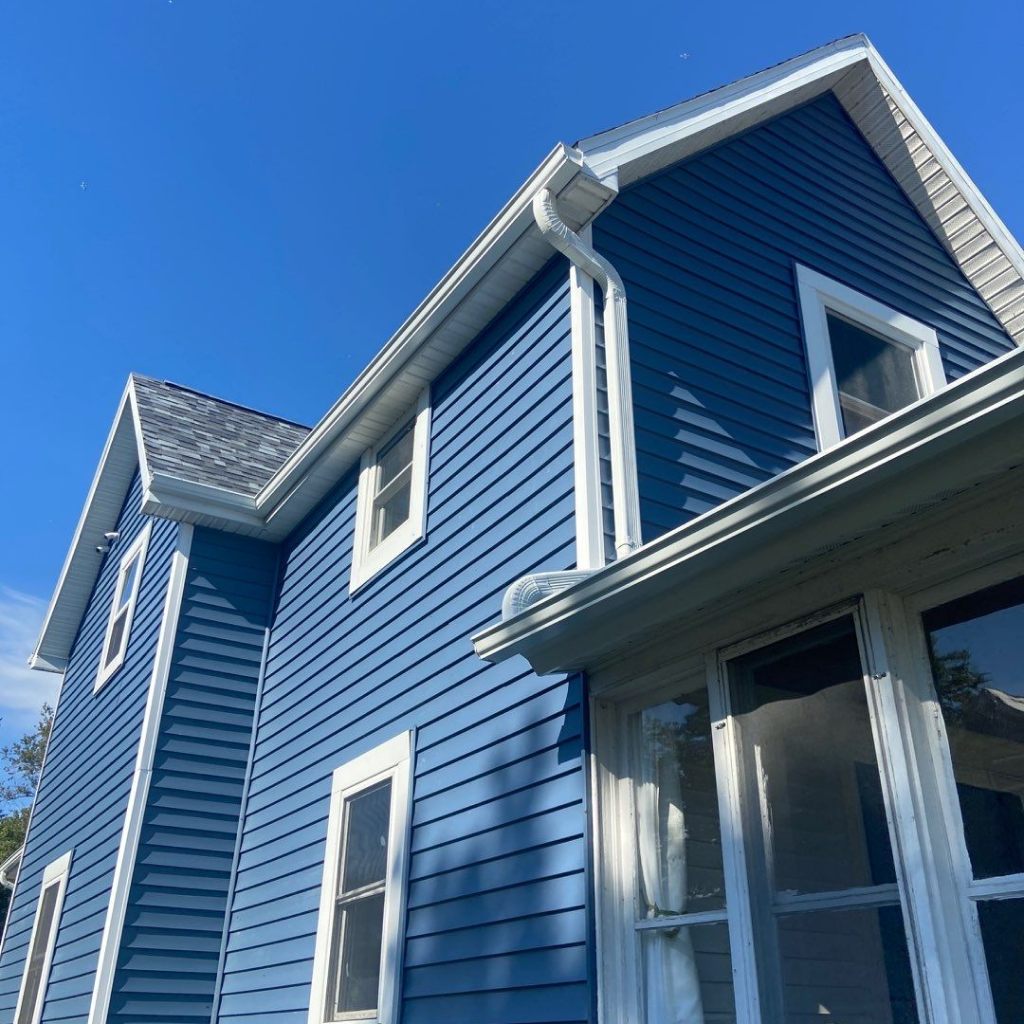
Prestige Roofing LLC installs seamless gutters built for these conditions, with proper bracket spacing, correct downspout sizing, and attention to how water needs to move away from your foundation quickly and completely. If your current gutters are struggling to keep up with what Allouez winters and springs throw at them, a seamless system is worth a closer look.
Seamless gutter installation depends on more than forming new gutter runs. The condition of the fascia boards, roofline, drainage layout, and installation details all affect how well the finished system handles runoff.
Not every seamless gutter installation is built the same, and in Allouez, the details make a real difference. The weather patterns here put pressure on gutters in ways that cut corners cannot handle. Getting the specs right from the start means fewer problems down the road and a system that holds up through years of heavy rain, snowmelt, and temperature changes.
| Installation Detail | Allouez Standard | Why It Matters |
|---|---|---|
| Bracket Spacing | 2 feet on center | Supports heavy ice and provides a stable surface for seasonal maintenance |
| Downspout Size | 3×4 inches | Reduces clogging from tree debris and handles high snowmelt volume |
| Corner Fabrication | Strip mitres | Fewer seams than box corners, less caulking needed, holds up better under temperature changes |
| Gutter Finish | Powder-coated aluminum | Resists corrosion from annual rainfall and snowmelt without frequent repainting |
| Downspout Discharge | 4 to 6 feet from foundation | Meets local stormwater requirements and protects your foundation from pooling water |
These are not upgrades or add-ons. They are the baseline for a system that performs the way your home needs it to in this area. A gutter installed to lower standards may look fine at first, but Allouez winters will find the weak spots quickly.
Your seamless gutters are formed on-site using a portable roll-forming machine, cutting each run to the exact length of your roofline. This means no field splicing, no pre-cut sections forced to fit, and a cleaner result that performs better from day 1.
Most Allouez homes do well with 5-inch K-style gutters, but roofs over 2,000 square feet or pitches of 7/12 or steeper need 6-inch systems to handle the higher water volume. We size your gutters to match your actual roof, not just what is easiest to install.
Aluminum seamless gutters come in a range of powder-coated colors, so your new system can match or complement your home's trim and roofline without looking like an afterthought. The powder-coat finish also holds up far better than painted finishes under years of rain and snowmelt exposure.
If your property has significant tree coverage, micro-mesh gutter guards can be installed alongside your new seamless system to cut down on debris buildup and reduce how often you need to clean them. Getting guards in place before the heavy rain season hits in late fall is especially worthwhile in this area.
Living in Allouez means your gutters face real pressure year after year, from spring deluges to months of snow sitting on your roofline to the constant expansion and contraction that comes with wide temperature changes. A seamless system built to the right specs handles all of that without the weak points that cause sectional gutters to fail. Getting installation done in late spring or early fall tends to work well, giving the system time to settle in before the next heavy season arrives.
If you are ready to stop dealing with leaking gutters or worrying about what is happening behind your fascia boards, Prestige Roofing LLC is a good place to start. Homeowners in the Allouez area can reach out whenever they are ready, and we will take a look at what your home needs.
Got questions about your roof? We’ve got answers. From maintenance tips to insurance claims and repair timelines, our FAQ section covers the most common concerns homeowners have. Get informed and make confident decisions about protecting your home.
Yes, and it’s one of the details that gets overlooked most often. Gutters here need a slightly steeper pitch than you might find in areas with more gradual seasonal transitions, because sudden thaws can send a large volume of water through the system in a short window. If the pitch is too flat, water pools in the trough, freezes overnight, and puts extra weight and pressure on the brackets. Getting that angle right from the start keeps water moving toward the downspout quickly instead of sitting and causing problems.
Fascia board rot is common in this area, especially on homes that had sectional gutters where joints allowed water to work behind the system over time. If new gutters are fastened to rotted fascia, the brackets will not hold securely through winter ice, and the whole system can pull away from the roofline. Catching that before installation means the repair is straightforward rather than something that has to be addressed after the new gutters are already in place.
Corners are the one spot where even a seamless system requires a joint, which makes how that joint is built a real factor in long-term performance. Strip mitre corners create fewer seam points than box corners, which means less caulking exposed to the temperature changes Allouez sees every year. Box corners rely on multiple caulked seams that soften and separate over time, and once a corner starts leaking, water runs directly down behind the gutter toward your fascia boards and siding.
Your Local Roofing Experts in Green Bay, WI