 ×
From Serving Our Country
to Serving Your Roof
From Serving Our Country
to Serving Your Roof
Grand Chute winters are hard on roofs. Between heavy snow settling on shingles for weeks at a time, ice building up along eaves and gutters, and repeated temperature changes that work at flashing and seams, your roof takes a beating from November through March. When melting snow refreezes around vents, valleys, or chimney bases, it creates the kind of slow, hidden moisture problem that can travel into your attic and ceiling well before you notice anything from inside. Spring storms and summer winds add to the pressure, leaving homeowners here dealing with storm damage during nearly every season.
When something goes wrong with your roof, waiting is rarely a good idea. A small opening in your shingles or a failed section of flashing can let water move deeper into the roof deck and framing before the next storm even arrives. That's where Prestige Roofing LLC comes in. As a local contractor familiar with the demands of Wisconsin's weather patterns, the team responds quickly to protect your home and stop damage from spreading. Whether the problem came from a winter snowstorm, spring thaw, or a summer storm, you get fast, reliable help from people who understand what roofs in this area actually face.
Roof damage can create immediate concerns about leaks and further damage to the home. Prestige Roofing LLC responds by addressing the immediate problem first, then inspecting the roof and planning the permanent repair.
Not every roof problem needs an emergency call, but some situations genuinely cannot wait. In a Wisconsin climate where rain, snow, and temperature changes can turn a small opening into a serious problem within hours, knowing what warrants fast action helps you make the right call.
| Situation | Why It Qualifies as Emergency | Typical Risk Window |
|---|---|---|
| Active leak reaching interior spaces | Water spreads quickly into roof decking, insulation, and framing | Hours to days |
| Missing or displaced shingles after a storm | Exposed roof deck is vulnerable to the next rain or snowstorm | Hours |
| Failed flashing around chimneys or vents | Opens a direct path for water at high-risk roof points | Hours to days |
| Ice dam with visible water backing up | Melting water is forced under shingles and into the roof deck | Hours during thaw |
| Sagging or visibly stressed roof deck | Indicates structural stress that can get worse under any issue | Immediate |
Older homes in the Grand Chute area tend to face these situations more often because aging shingles and brittle flashing are more likely to fail under pressure. That said, newer roofs are not immune, especially after hail or heavy snow. If any of the situations above apply to your home, temporary dry-in protection is the priority, with permanent repairs following once your roof is stabilized.
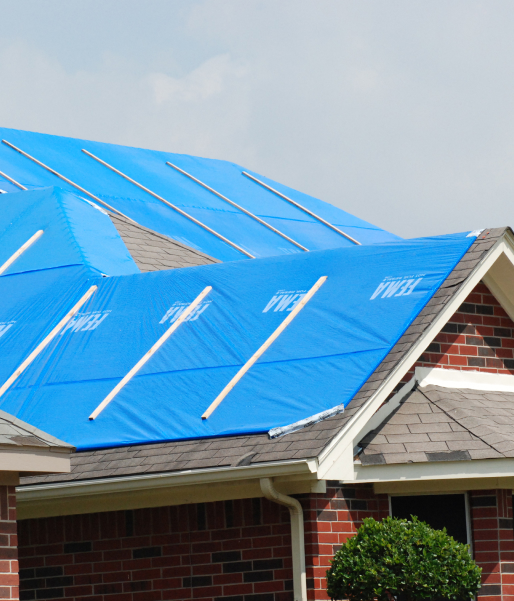
When your roof has an open area, the materials used to protect it until permanent repairs are done matter. Heavy-duty tarps and self-adhering underlayment are installed to cover exposed roof decking and keep water out through whatever weather arrives next, including rain, snow, and wind.
Chimneys, skylights, pipe boots, and roof valleys are the spots most likely to fail first in Grand Chute's winters, and emergency repairs address flashing directly at those points rather than just patching around them. Getting the flashing right means water has no easy path into the roof deck during the next thaw or storm.
Replacement shingles are selected and fastened to hold up under heavy snow, repeated temperature changes, and strong winds, not just to fill a gap. Proper fastening patterns and underlayment beneath repaired sections are part of every fix, so the repair does not become a new weak spot come winter.
Re-roofing work in Grand Chute requires a permit, and unpermitted work can be stopped and charged at a significantly higher rate by the town. Prestige Roofing LLC handles permit requirements so your emergency repair is documented correctly and does not create a problem when you sell your home or need to reference the work later.
Wisconsin winters do not wait for a convenient time to cause problems, and neither should your response when something goes wrong with your roof. A home that stays dry through heavy snow, spring melts, and summer storms is one that holds its value and avoids the kind of expensive secondary damage that comes from letting a small problem sit. Getting the right team involved quickly is what separates a straightforward repair from a much bigger project down the road.
Prestige Roofing LLC is ready to help Grand Chute homeowners when it matters most. If you have an active leak, missing shingles, or any roof damage that needs fast attention, reaching out now is the right move. The sooner your roof is protected, the better the outcome for your home.
Got questions about your roof? We’ve got answers. From maintenance tips to insurance claims and repair timelines, our FAQ section covers the most common concerns homeowners have. Get informed and make confident decisions about protecting your home.
Yes, re-roofing work in Grand Chute requires a permit regardless of how urgent the job is. The town can stop unpermitted work and charge a penalty fee well above the standard rate, so skipping the permit process is not worth the risk. A reputable contractor will pull the permit on your behalf, so the work is properly documented from the start.
Water that gets under shingles during a snowstorm or thaw can sit in the roof decking and insulation long after the visible leak stops, especially in winter when drying conditions are poor. That trapped moisture can cause roof decking to soften and weaken before warmer weather arrives to dry things out. Getting the affected area inspected and dried in quickly after an emergency repair reduces the risk of that secondary damage developing quietly underneath a repaired surface.
A properly installed temporary dry-in using heavy-duty tarps or self-adhering underlayment can protect an open area through significant cold and snow if it’s secured correctly around the edges and fastening points. The key word is correctly: a loose or undersized cover can fail fast under wind or heavy snow. The repair also needs to be checked after a major storm to confirm it’s still seated and doing its job until permanent work is scheduled.
Your Local Roofing Experts in Green Bay, WI