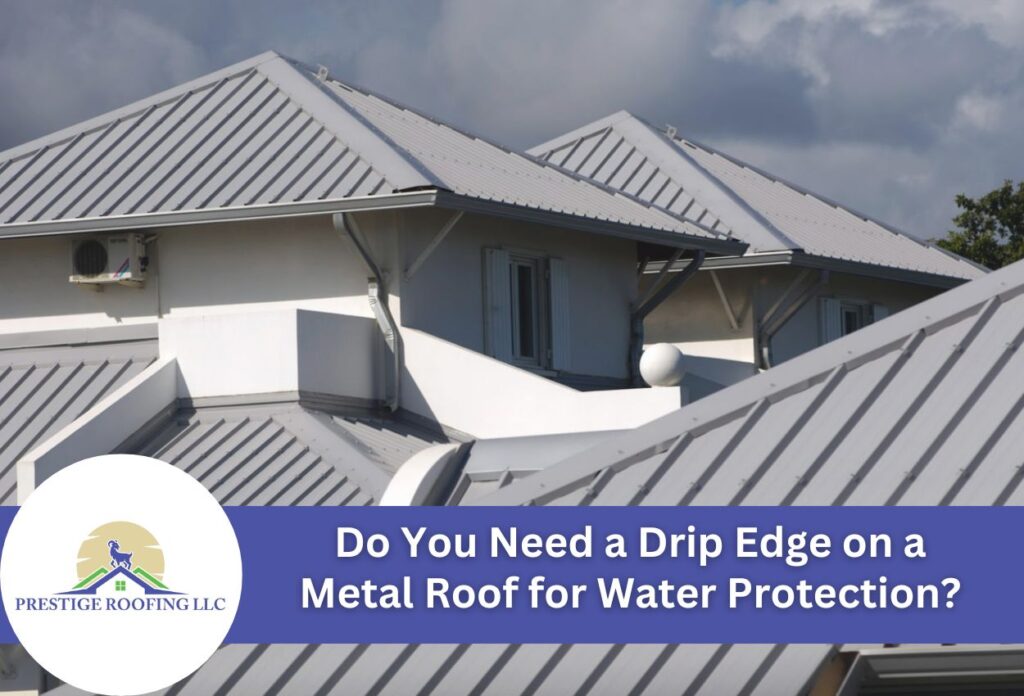
Metal roofing systems offer exceptional durability and weather protection, but many homeowners question whether a drip edge is truly necessary for their installation. A drip edge is a metal flashing component installed along the roof’s perimeter that directs water away from the fascia board and foundation. This seemingly simple piece plays an important role in stopping water from damaging your home and making sure your roof hits its expected full lifespan.
The short answer is yes, installing a drip edge on a metal roof is essential for proper water management and structural protection. Without this important component, water can seep behind gutters, causing rot in wooden fascia boards and creating potential entry points for moisture into your home’s interior.
Common misconceptions about metal roof drip edge installation often lead homeowners to skip this important step. Some believe that metal roofing systems and materials are inherently waterproof enough to eliminate the need for additional flashing. Others assume that proper water protection can be achieved through gutters alone. These assumptions can result in expensive repairs down the road.
Understanding the benefits of drip edge on metal roofing systems helps homeowners make informed decisions about their roofing projects. Proper drip edge flashing installation prevents ice dam formation, reduces pest infiltration, and maintains the structural integrity of your home’s exterior components.
What Happens When You Skip the Drip Edge?
Installing metal roofing without a drip edge creates serious vulnerabilities that can compromise your home’s structural integrity. When water runs off the roof without proper edge flashing, it follows the path of least resistance and often flows behind gutters or directly against the fascia board. This continuous moisture exposure causes wooden fascia boards to rot, warp, and deteriorate over time.
The absence of drip edge flashing and metal roof protection allows water to leak into areas where it should never reach. Water can soak into the roof decking, creating conditions for mold growth and wood rot that spreads throughout the roofing structure. Without proper metal roof water protection, water may also find its way into soffits and eventually into your home’s interior walls.
Foundation damage represents another significant concern when proper water management fails at the roof edges. Water cascading directly from the roof edge saturates soil around your foundation, potentially causing settling issues and basement flooding. This problem becomes particularly severe during heavy rainfall or snowmelt periods.
The long-term consequences of skipping metal roof drip edge installation compound over time. What begins as minor water infiltration evolves into extensive structural damage requiring replacement of fascia boards, roof decking, and potentially portions of the home’s framing. These repairs often cost thousands and could have been prevented with the proper installation of a drip edge.
Key Benefits of Installing Drip Edge Flashing
Drip edge flashing provides superior water protection by creating a controlled pathway for moisture runoff away from vulnerable roofing components. This metal barrier prevents water from backing up under roofing materials and directs it cleanly into gutters or away from the structure. The benefits of drip edge on metal roofing systems become immediately apparent during heavy rainfall, when proper water management prevents overflow and channeling that could otherwise damage fascia boards and soffits.
Professional metal roof drip edge installation creates a sealed barrier that protects the roof deck from moisture infiltration along the edges. Without this protection, capillary action can draw water upward between roofing materials and decking, creating conditions for rot and structural damage. The drip edge acts as the first line of defense against water penetration in these critical transition areas.
An extended roof lifespan is one of the best advantages of proper drip edge flashing metal roof installation. By preventing water damage to underlying structural components, drip edge flashing helps maintain the integrity of your entire roofing system. Metal roofing materials can perform optimally for decades when supported by proper water management infrastructure.
Building Codes and Requirements in Wisconsin
Wisconsin building codes specifically address drip edge requirements for metal roofing systems, establishing clear standards that contractors must follow during installation. The state building code requires drip edge flashing along all roof perimeters where metal roofing meets gutters or overhangs. These regulations ensure proper metal roof water protection and help prevent water-related structural damage that could compromise building integrity.
Local municipalities in the Green Bay area often have additional requirements beyond state minimums for metal roof drip edge installation. Many jurisdictions require specific materials and installation methods that exceed basic code standards. Building departments typically specify the gauge of metal flashing, overlap requirements, and fastening patterns that contractors must follow to receive approval.
Permit applications for metal roofing projects must include detailed plans showing drip edge placement and specifications. Inspectors verify that drip edge flashing metal roof installations meet both state and local requirements during framing and final inspections. Projects that attempt metal roofing without a drip edge rarely pass inspection, requiring expensive corrections before approval.
Code compliance issues frequently arise when homeowners or contractors skip proper planning phases. Inspection failures delay project completion and may require the removal of completed roofing sections to install missing drip edge components. Understanding these requirements before starting your roofing project prevents delays and ensures the benefits of the drip edge on metal roof systems are properly realized while meeting all regulatory standards for your area.
Professional Installation vs. A DIY Approach
Metal roof drip edge installation requires specific tools and techniques that determine whether homeowners should tackle the project themselves or hire professional contractors. The installation process involves measuring and cutting metal flashing to precise dimensions, securing it to the roof decking with appropriate fasteners, and ensuring proper overlap at corners and joints. Essential tools include tin snips, a drill with metal bits, a chalk line, a measuring tape, and safety equipment for working at roof height.
The process begins with removing existing gutters and cleaning the fascia board area. Contractors measure each roof section and cut drip edge pieces with proper overhang dimensions. Installation starts at one end of the roof edge, with each piece overlapping the previous section by at least two inches. Fasteners must go into the roof decking adequately while avoiding going in too far, which could create leak points.
Professional contractors bring expertise in handling complex roof geometries and ensuring code compliance for metal roof drip edge installation. They understand proper flashing techniques, have experience with various metal roofing materials, and carry insurance coverage for high-altitude work. Professionals also recognize when additional waterproofing measures are needed beyond basic drip edge flashing and metal roof requirements.
DIY installation becomes viable for homeowners with construction experience and proper safety equipment. Simple roof designs with minimal corners and obstacles present fewer challenges than complex architectural features. However, improper installation can void roofing warranties and create liability issues that outweigh potential savings, making professional installation the preferred choice for most metal roof water protection projects.
Choosing the Right Drip Edge Material
Selecting appropriate drip edge materials requires careful consideration of your metal roofing system’s specific characteristics and environmental demands. Aluminum drip edge resists corrosion and works well with aluminum or steel roofing panels. This material provides lightweight durability while maintaining compatibility with most metal roofing fastening systems. Galvanized steel drip edge delivers superior strength for heavy-duty applications and matches well with galvanized metal roofing materials.
Copper drip edge is the premium choice for metal roofing systems, offering exceptional longevity and natural weather resistance. This material pairs ideally with copper roofing panels but also complements other metal roofing types when looks are being considered. The natural patina that develops over time provides both protection and visual appeal that can enhance your home’s architectural character.
Material thickness plays an important role in metal roof drip edge installation and long-term performance. Standard residential applications typically use 24 to 28-gauge materials, while commercial installations may require heavier gauges for increased durability. The chosen material must withstand thermal expansion and contraction cycles without cracking or separating from fasteners.
Compatibility between your existing roof components and drip edge options affects both performance and appearance. Color matching ensures seamless integration with your metal roofing system, while material compatibility prevents galvanic corrosion that can occur when dissimilar metals contact each other. Professional assessment of your specific installation helps determine the optimal drip edge flashing metal roof combination that provides lasting metal roof water protection while maintaining warranty compliance.
Making the Smart Decision for Your Home
Determining whether to install a drip edge on your metal roof requires evaluating your specific roofing situation against long-term home protection goals. Homes with existing gutter systems benefit significantly from metal roof drip edge installation, as the flashing creates proper water channeling that prevents overflow during heavy storms. Properties without gutters still require drip edge protection to direct water away from foundation areas and prevent soil erosion around the structure.
Your roof’s architectural complexity influences the urgency of drip edge flashing metal roof installation. Simple gable roofs with minimal edges may seem less vulnerable, but even basic designs need protection against capillary action that draws moisture into the roof decking. Complex rooflines with multiple valleys, dormers, and intersections create numerous water collection points where a proper drip edge becomes critical for preventing structural damage.
The age and condition of your home’s fascia boards and underlying structure directly impact your drip edge decision. Older homes with wooden components face a greater risk from metal roofing without a drip edge, as existing wear makes these areas more susceptible to water damage. Newer construction with treated lumber and modern moisture barriers still benefits from comprehensive metal roof water protection to maintain warranty coverage and prevent premature deterioration.
Moving forward with your metal roof project requires selecting qualified contractors who understand the benefits of drip edge on metal roof systems and local code requirements. Obtaining multiple estimates that include proper drip edge installation ensures comprehensive protection while allowing cost comparison. Schedule installation during favorable weather conditions to prevent delays and ensure the best performance of your complete roofing system.
Ensure Your Roof’s Longevity with Prestige Roofing LLC
If you’re considering a metal roof for your home, understanding the importance of a drip edge is crucial. In Wisconsin, adhering to local building codes, including proper drip edge installation, is essential for both compliance and performance.
Don’t compromise on your roof’s structural integrity. Get a professional installation to ensure that your metal roof is equipped with the right type of drip edge flashing, enhancing its water protection and overall durability. Choose Prestige Roofing LLC for expert guidance and high-quality installation. Call us today at (920) 791-0414 and secure your home’s future with a properly installed metal roof.