Most Popular Commercial Roof Insulation Materials for Modern Buildings

Selecting the right insulation material directly impacts a commercial building’s energy efficiency, operational costs, and overall performance. Poor insulation choices lead to significant heat loss in winter and excessive cooling demands during summer months, creating unnecessary financial strain on building owners and tenants.
Polyiso roof insulation stands out as the most widely used option due to its exceptional thermal performance and compatibility with various roofing systems. Spray foam insulation is another enhanced option that offers superior air sealing and works particularly well for irregularly-shaped roof surfaces or retrofit applications.
These flat roof insulation options each deliver distinct advantages depending on building requirements, climate conditions, and budget considerations. Understanding the characteristics of these most common commercial roof insulation materials helps property owners make informed decisions that maximize long-term building performance while controlling energy expenses throughout the structure’s lifespan.
| Material | Price Range (Low-High) | Best Use Case |
| Polyiso | $0.48 – $0.55 | Primary Thermal Layer |
| EPS | $0.37 – $0.44 | Tapered Fill / Metal Retrofit |
| XPS | $0.85 – $0.95 | Plaza Deck / Green Roof |
| SPF (Closed Cell) | $0.50 – $0.80 | Complex Geometry / Air Sealing |
Polyiso Insulation Dominance in Commercial Roofing Applications
Polyisocyanurate foam boards have established themselves as the most common commercial roof insulation material across flat and low-slope roofing systems. This type of rigid foam board insulation delivers exceptional thermal performance with R-values typically ranging from around R-5.6 to R-6.8 per inch of thickness, making it highly effective for meeting strict building codes regarding the energy efficiency of commercial buildings.
The widespread adoption of polyiso roof insulation stems from its unique combination of qualities that align perfectly with the demands of commercial roofs. Its closed-cell structure provides excellent moisture resistance while maintaining dimensional stability under varying temperature conditions. The material’s compatibility with single-ply membrane systems, built-up roofs, and modified bitumen applications makes it versatile for diverse commercial projects.
Building codes increasingly require higher insulation values to achieve energy efficiency standards, and polyiso consistently meets these requirements while offering cost-effective installation. Its lightweight properties reduce the concern of adding more weight to the roof compared to other flat roof insulation options, while its fire-resistant qualities enhance building safety. These combined benefits explain why polyisocyanurate is the preferred solution for modern commercial buildings.
The Benefits of Using Spray Foam Insulation for Complex Commercial Roofs
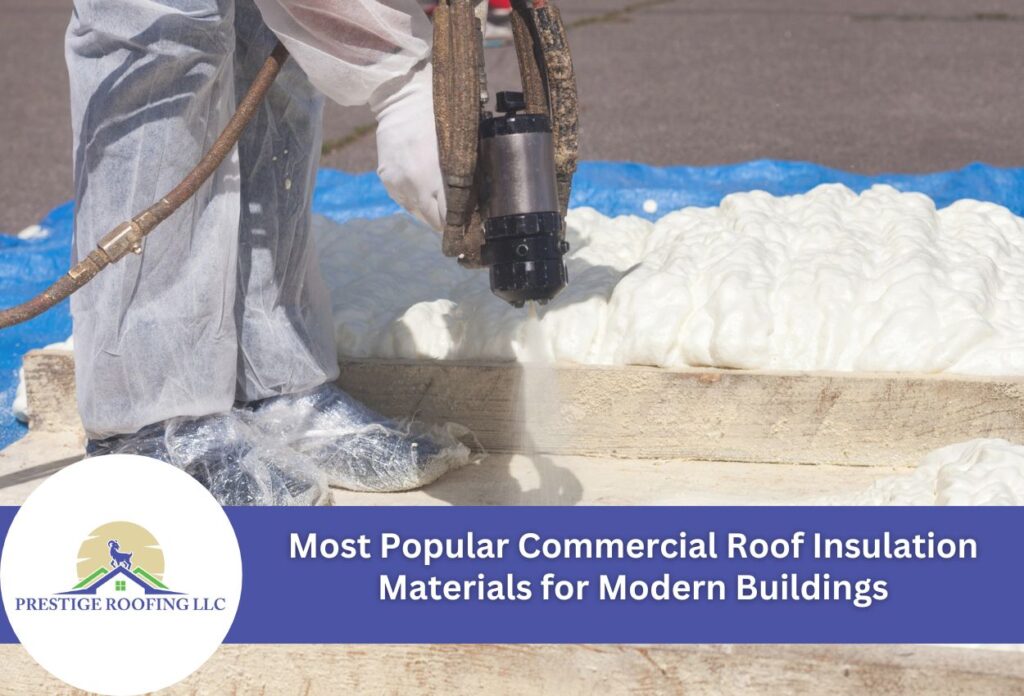
Spray foam insulation excels in commercial roofing applications where traditional rigid foam board insulation cannot effectively address complex architectural features. Spray foam expands during application to create seamless barriers around gaps in the roof, HVAC equipment, and irregular surfaces that would otherwise create thermal bridges and cause air leaks.
The ability of spray foam to conform to any surface shape makes it particularly valuable for retrofit projects and buildings with numerous roof-mounted equipment installations. Unlike other commercial roof insulation materials that require precise cutting and fitting around obstacles, spray foam flows into gaps and crevices to eliminate thermal weak spots that compromise energy efficiency.
Long-term performance advantages distinguish spray foam systems in challenging commercial environments. The monolithic application creates a continuous insulation layer that maintains its thermal properties over decades without settling or shifting. This stability proves especially beneficial for flat roof insulation options where temperature cycling and building movement can compromise segmented insulation systems. The self-adhering nature of spray foam also eliminates thermal bridging around fasteners that is common with mechanical attachment methods used for other commercial roof insulation materials.
Other Rigid Foam Board Systems for Straightforward Commercial Installations
Expanded polystyrene (EPS) and extruded polystyrene (XPS) boards represent reliable rigid foam board insulation choices for commercial roofs requiring predictable thermal performance and straightforward installation procedures. EPS offers consistent R-values around R-3.6 to R-4.4 per inch while maintaining excellent long-term thermal stability across varying temperatures common in commercial environments.
XPS boards deliver higher moisture resistance compared to EPS options, making them suitable for commercial roof insulation materials applications where exposure to humidity or occasional water contact may occur. The closed-cell structure of XPS provides R-values ranging from R-5.6 to R-6.8 per inch, positioning it between EPS and polyiso when it comes to rating thermal performance while offering superior compressive strength for demanding structures.
Many commercial roofing installers favor rigid board systems for labor efficiency and quality control. These flat roof insulation options require minimal specialized equipment compared to spray applications, allowing roofing crews to maintain consistent installation speeds across large commercial surfaces. The dimensional stability of both EPS and XPS boards simplifies handling and reduces waste during installation, while their compatibility with various attachment methods provides flexibility for different structural requirements and roof membrane systems.

Climate Considerations for Selecting Commercial Roof Insulation
Regional weather patterns and temperature extremes significantly influence the performance characteristics of different commercial roof insulation materials. Regions that receive cold weather require insulation systems that maintain thermal efficiency during temperature drops while resisting moisture infiltration from snow and ice conditions. Hot climate areas demand materials that resist thermal degradation and maintain structural integrity under intense UV exposure and extreme heat cycling.
The performance of polyiso roof insulation varies with temperature conditions, showing reduced R-values in extremely cold temperatures but excelling in moderate to warm climates. Spray foam insulation maintains consistent thermal properties across wider temperature ranges, making it suitable for regions experiencing significant seasonal variations. Rigid foam board insulation options like XPS perform reliably in moisture-prone environments, while EPS boards work effectively in stable temperature conditions.
Moisture management strategies become critical factors when selecting flat roof insulation options for specific climate zones. Areas with high-humidity require vapor barriers and breathable insulation systems to prevent condensation issues that compromise thermal performance. Meanwhile, dry climates may prioritize UV-resistant materials that withstand intense solar radiation without degrading. Understanding these climate-specific requirements ensures optimal long-term performance from commercial roof insulation materials regardless of geographic location.
R-Value Requirements and Energy Performance Standards
Commercial building energy codes establish minimum R-value thresholds that directly influence the type of insulation material that’s selected. These standards vary by climate zone and building type, with northern regions typically requiring R-30 to R-50 minimum values for commercial roof insulation materials. Understanding these requirements helps building owners select the appropriate insulation that will ensure code compliance.
There are other energy performance standards beyond basic R-value requirements, such as those that involve reduced thermal bridging and continuous insulation mandates. Modern codes increasingly emphasize eliminating thermal weak points that compromise a building’s overall performance, making seamless flat roof insulation options more attractive for compliance strategies. Spray foam roof insulation naturally addresses these concerns through its continuous application method, while rigid board systems require careful attention to joint sealing and fastener thermal bridging.
The choice to invest in commercial roof insulation materials should balance upfront material costs against the long-term potential for energy savings. Higher-performance insulation systems typically command premium pricing but deliver measurable utility cost reductions throughout building operation periods. Property owners who select the most common commercial roof insulation materials based solely on a cheaper initial price often experience higher operational costs that exceed any short-term savings over the building’s lifespan.
Professional Installation Factors That Determine The Success of Insulation
The quality of installation work directly impacts how well commercial roof insulation materials perform throughout their service life. Even premium polyiso roof insulation or spray foam can fail to deliver expected thermal performance when installation procedures deviate from manufacturer specifications. Proper surface preparation, correct adhesive application, and precise seam sealing determine whether flat roof insulation options achieve their rated R-values and moisture resistance capabilities.
Qualified roofing contractors understand the specific installation requirements for different rigid foam board insulation systems and spray applications. They recognize that temperature and humidity conditions during installation affect adhesive curing, foam expansion rates, and membrane bonding. Professional installers also ensure proper vapor barrier placement and maintain continuous insulation layers without thermal bridging that compromises energy performance.
Working with experienced commercial roofing professionals ensures insulation systems meet building code requirements and manufacturer warranty conditions. Certified contractors verify substrate conditions, maintain proper installation sequences, and document compliance with specified installation parameters. This professional oversight protects building owners from performance failures and ensures the most common commercial roof insulation materials deliver their intended thermal protection and energy efficiency benefits over decades of service.
Choose Prestige Roofing LLC for High-Quality Commercial Roof Insulation
Understanding the importance of selecting the right insulation for your commercial property is crucial for enhancing energy efficiency and overall building performance. With numerous insulation options available, it’s vital to choose materials that not only meet but exceed energy performance standards. At Prestige Roofing LLC, we specialize in installing high-quality commercial roof insulation that aligns perfectly with your building’s needs and local climate considerations.
Call us today at (920) 791-0414 to discuss your insulation needs and how we can help you achieve the best outcomes for your property.