
Yes, roof cleaning is strongly recommended for Green Bay homeowners. The city’s average annual humidity of 70% to 80%, combined with around 30 inches of precipitation per year, creates near-ideal conditions for moss, algae, and black streak growth on asphalt shingles. These aren’t just appearance problems. Left untreated, organic growth eats into shingle materials and can shorten roof life by 5 to 10 years.
Most Green Bay residential roofs use asphalt shingles, which are especially vulnerable to algae responsible for those dark black streaks you see running down rooflines across the Fox Valley. Once it takes hold, it spreads fast and holds moisture against the shingle surface, speeding up deterioration with every freeze-thaw cycle Green Bay winters deliver.
This guide covers how often to clean your roof, what happens if you skip it, how to weigh DIY against hiring a professional, and whether the cost is worth it so you can make a confident, informed decision.
What Happens If You Don’t Clean Your Roof?
Skipping roof cleaning in Green Bay sets off a damage timeline that gets more expensive the longer it runs. Algae staining typically appears within 1 to 2 years of first growth and signals that moisture is already being held against your shingles. Within 3 to 5 years, moss can physically lift and crack shingle edges, forcing water underneath. Lichen is the slowest but most damaging once established, it permanently etches shingle granules and can cause visible structural damage after 5 or more years.
Green Bay’s climate makes all of this worse. Temperatures swing from around 10 degrees Fahrenheit in winter to 85 degrees in summer, putting asphalt shingles through constant expansion and contraction. When moss or debris traps moisture in those shingles, that freeze-thaw cycle accelerates granule loss and raises the risk of ice dam formation along your roofline. Once granules wash away, the shingle loses its UV protection and waterproofing ability, and that damage cannot be reversed.
There is also a financial consequence that most homeowners don’t expect. Most asphalt shingle warranties, which typically run 25 to 50 years, include maintenance clauses. Ignoring organic growth can void those warranties outright. If the roof fails early, you’re looking at a full replacement with no manufacturer coverage. Premature roof replacement in Green Bay averages $8,000 to $14,000 for a standard single-family home. Regular cleaning costs a fraction of that.
How Often Should You Clean Your Roof in Green Bay, WI?
Most Green Bay homeowners should clean their roofs every 1 to 3 years, not every 3 to 5 years, because the Fox River Valley’s humidity levels push organic growth faster than in drier climates. Roofs with heavy tree coverage or north-facing slopes fall on the shorter end of that range. Roofs with minimal shade and good drainage may stretch to 3 to 5 years, but that’s the exception in this region, not the rule. Green Bay’s year-round humidity, averaging 70% to 80%, means waiting too long almost always results in visible moss or algae before the next cleaning is scheduled.
| Season | Best Window | Temperature Range | Why It Works |
|---|---|---|---|
| Spring | April to May | 40 degrees to 65 degrees | Removes winter debris and pre-treats before summer humidity peaks, giving solutions time to work without fast evaporation |
| Fall | September–October | 45 degrees to 60 degrees | Clears leaf buildup before freeze-thaw season begins, reducing moisture trapping that feeds ice dam formation |
Summer heat above 80 degrees causes cleaning solutions to evaporate too quickly to treat organic growth properly. Winter temperatures below 35 degrees risk solution freezing on contact, creating ice hazards on the surface of the roof. Stick to spring or fall scheduling in Green Bay for the best results.
Should You Clean Your Roof Yourself or Hire a Professional?
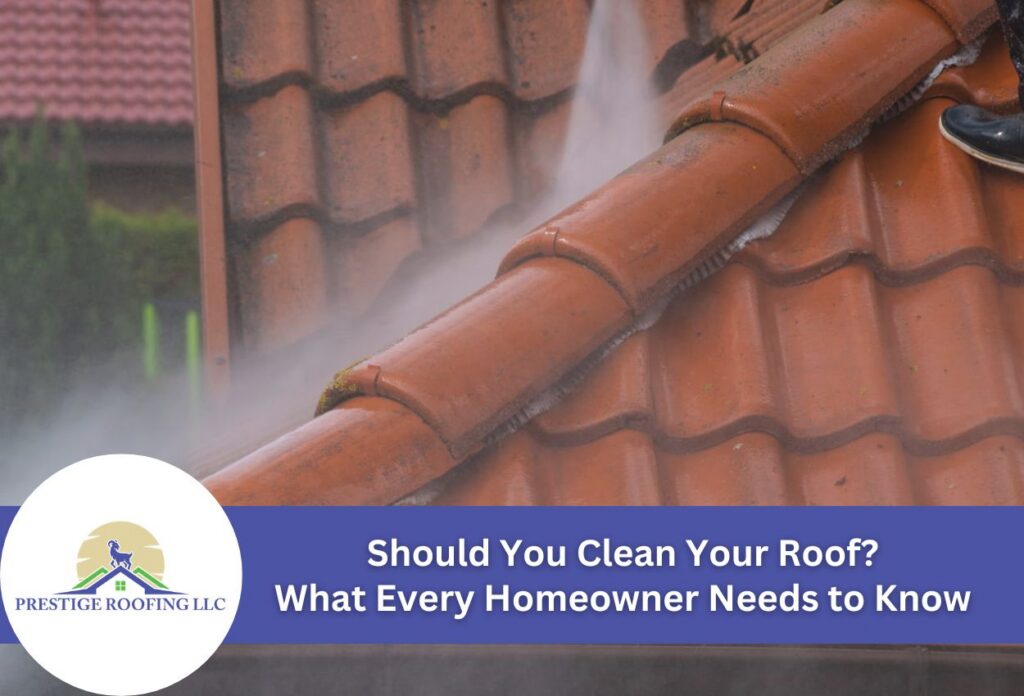
DIY roof cleaning is possible under the right conditions, but pressure washing above 1,200 PSI voids most shingle warranties and can strip 20% to 30% of your shingles’ granule coating in a single session, which is why ARMA recommends low-pressure soft washing only.
When DIY Makes Sense
- Single-story home with a low-pitch roof: A roof pitch of 4:12 or less keeps the work safer and manageable without professional equipment.
- Light algae or surface debris only: If growth is early-stage and hasn’t yet lifted shingle edges, a garden sprayer with a sodium hypochlorite or zinc sulfate-based biodegradable solution can handle it.
- Comfortable on a ladder: Anyone without steady footing or ladder experience should not attempt roof work, even on a single-story home.
When to Hire a Pro
- Two-story home or steep pitch above 6:12: Fall risk increases sharply at steeper angles, and most standard ladders won’t provide safe access.
- Heavy moss, lichen, or years of buildup: Lichen in particular requires stronger treatment and physical removal that DIY sprayers can’t fully handle.
- Roof age over 15 years or visible damage: Older roofs need a professional roof inspection alongside cleaning, a licensed contractor catches problems a homeowner will miss.
Wisconsin requires licensed roofing contractors for exterior work, so hiring locally means built-in accountability if anything goes wrong. When in doubt, the cost of a professional cleaning, typically $300 to $600 for a standard Green Bay home, is far less than replacing a roof damaged by the wrong method.
Is It Safe to Clean Your Own Roof, and What Method Should You Use?
DIY roof cleaning is manageable on low-slope, single-story homes, but falls are the leading cause of roofing-related injuries, and the CDC identifies roofing as one of the highest-risk occupations for fall injuries. Always wear a safety harness and non-slip footwear, and never step onto a wet or frozen surface. Green Bay’s spring thaw period, typically March through April, makes roof surfaces especially unpredictable.
- Clear loose debris first: Use a soft broom or leaf blower to remove leaves, branches, and loose material before applying any solution. Walking on debris increases slip risk.
- Mix and apply a soft-wash solution: Combine 1 part bleach with 3 to 6 parts water and add a surfactant to help the solution cling to shingles. Apply with a low-pressure garden sprayer, only no pressure washer contact with shingles.
- Allow a 15 to 20 minute dwell time: Let the solution sit long enough to break down algae, moss spores, and black streak-causing organisms before rinsing.
- Rinse with a standard garden hose: Use normal hose pressure only. High-pressure rinsing strips granules and voids most asphalt shingle warranties.
Green Bay homeowners must also account for runoff. Cleaning solutions cannot drain directly into storm sewers or toward the Fox River. Cover landscaping and plants before applying, and direct runoff away from hard drainage surfaces to stay within local environmental standards.
Does Cleaning Your Roof Actually Save You Money?
There’s a measurable return that can be seen from maintenance that most homeowners overlook. When amortized against a full replacement, regular cleaning is one of the highest-return maintenance tasks a homeowner can do.
| Option | Typical Cost | Estimated Lifespan Preserved | Cost per Year of Life Preserved |
|---|---|---|---|
| DIY cleaning (materials only) | $30 to $80 | 3 to 5 years | $8 to $27/year |
| Professional soft-wash cleaning | $300 to $600 | 5 to 8 years | $38 to $120/year |
| Full roof replacement | $8,000 to $14,000 | 20 to 30 years (new lifespan) | $267 to $700/year |
There’s also a risk management angle that goes beyond costs. Some homeowners’ insurance policies in Wisconsin will flag or deny claims on roofs with documented neglect if prior inspection photos show visible moss or algae, and the roof later fails, the insurer may reject the claim. Regular cleaning creates a defensible maintenance record that protects your coverage.
Run the numbers against your roof’s age and condition, then decide which option fits. For most homeowners, professional cleaning every 1 to 3 years is the most cost-effective path, especially before problems grow severe enough to require a full tear-off.
Ready to Stop Guessing? Here’s How to Get Your Green Bay Roof Cleaned the Right Way
Avoiding an $8,000 to $14,000 premature replacement starts with booking a cleaning before spring and fall windows fill up, and both seasons go fast in the Green Bay market. Prestige Roofing LLC serves homeowners across Green Bay, WI, using ARMA-compliant soft-wash methods and biodegradable, eco-friendly solutions that protect your shingles and the surrounding watershed.
Don’t wait until moss or black streaks are visible, by then, damage is already done. A licensed contractor can inspect and clean in one visit, giving you a maintenance record that protects your warranty and your insurance coverage.