What Does TPO Roof Cracking Mean for Your Building and How Serious Is It?
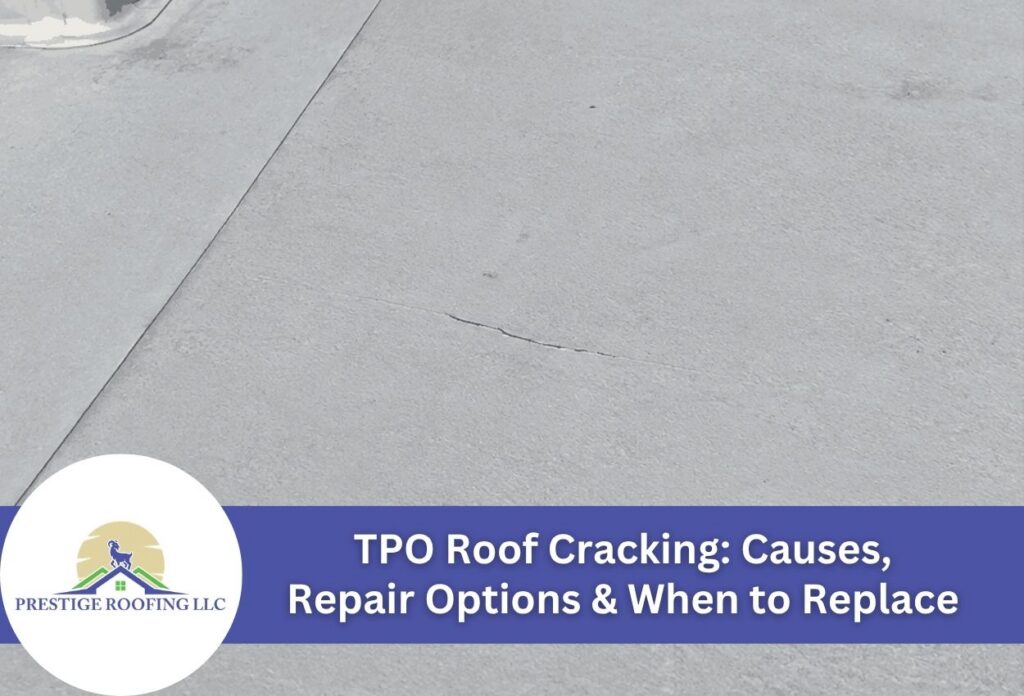

TPO membranes are built to last 15 to 30 years, depending on thickness and installation quality, but visible cracking before year 10 almost always signals premature failure, not normal wear. When cracks appear early, something is wrong: the membrane is breaking down faster than it should, and the building underneath is now at risk of water damage.
In Green Bay and northeastern Wisconsin, that risk is higher than in most parts of the country. Seasonal temperatures here swing from around 10 degrees in winter to 85 degrees in summer, a range of 75 degrees or more. That kind of thermal movement puts real stress on roofing membranes season after season. Add heavy snow, spring thaw, and summer humidity, and TPO roofs in this region face conditions that can shorten their lifespan faster than manufacturers’ ratings suggest.
What Causes TPO Roof Cracking and Which Causes Are Most Common in Northeastern Wisconsin?
Five main factors drive TPO roof cracking, and at least three of them are elevated-risk concerns for building owners in the Green Bay area. Cracking at edges, flashings, and gaps is almost always the earliest visible sign that those areas flex and shift the most, so they fail first.
- UV degradation and polymer breakdown: Moderate risk. Sun exposure slowly depletes the antioxidants and UV stabilizers that keep TPO flexible over time. Once these protective elements break down, the membrane becomes brittle and cracks under stress. Green Bay summers average 70 to 85 degrees, which accelerates this process on south- and west-facing roof sections.
- Repeated temperature changes: Elevated risk. With seasonal temperatures swinging from around 10 degrees in winter to 85 degrees in summer, Green Bay roofs expand and contract across a range of 75 degrees or more every year. That constant movement fatigues the membrane at seams, edges, and gaps faster than in milder climates.
- Thermal expansion and contraction stress: Elevated risk. Even within a single season, daily temperature swings stretch and compress the membrane. Flat and low-slope roofs with large unbroken surface areas are especially prone to stress buildup at termination points.
- Improper heat-welded seam installation: Moderate to elevated risk. Seams welded too hot, too cold, or too narrow fail under movement stress. Cold-weather installations common in this market during shoulder seasons raise the risk of under-welded seams that crack within a few years.
- Low-quality or undersized membrane: Elevated risk when present. 45-mil membranes are more crack-prone than 60-mil or 80-mil membranes under thermal stress. Thinner membranes leave less material to absorb movement, and northeastern Wisconsin’s wide seasonal temperature swings make the gap in durability between thicknesses meaningful.
Temperature changes are the single biggest driver of TPO roof cracking in northeastern Wisconsin. Roughly 45 to 55 inches of annual snowfall combined with repeated crossings near 32 degrees each winter and spring means membranes here face more stress cycles per year than in most U.S. markets. Catching cracks early at flashings and edge terminations, before water gets in, is the most cost-effective path forward.
Is TPO Roof Cracking at the Seams a Different Problem Than Surface Cracking?
Yes, seam cracking is the highest-urgency crack type on a TPO roof, carrying a High risk level and a failure window of just 1 to 3 years if left untreated, compared to 3 to 7 years for surface crazing. The table below breaks down the three main crack types building owners encounter.
| Crack Type | Typical Cause | Risk Level | Repairable Without Full Replacement? | Avg. Years Before Failure If Untreated |
|---|---|---|---|---|
| Surface crazing / micro-cracking | UV degradation, polymer breakdown | Low | Yes | 3 to 7 years |
| Seam separation or cracking | Improper heat welding, thermal movement stress | High | Partial | 1 to 3 years |
| Flashing / edge cracking | Repeated temperature changes, poor termination | Moderate | Yes | 1 to 2 years |
TPO roof cracking at seams is a different and more urgent problem than surface cracking because open seams allow direct leaks to form at the roof assembly. Most manufacturer warranties require owners to report any membrane leaks or failures within 30 days of discovery, and failing to do so can void coverage for that specific damage. Improperly heat-welded seams often show cracking or peeling within 2 to 5 years, well before the membrane itself ages out. A professional commercial roof inspection can tell the difference between an installation deficiency and normal material aging, which matters for determining whether a warranty claim is still an option.
How Do You Fix a Cracking TPO Roof Membrane and When Is Repair No Longer Enough?
Minor-to-moderate TPO cracking can be repaired, but the process only works reliably when surface temperatures are above 40 degrees, which limits effective repair windows in northeastern Wisconsin to roughly April through October. A proper repair follows four steps: clean and dry the affected area completely, apply a TPO-compatible patch membrane or seam tape, re-weld or adhere all edges, then inspect adjacent seams for early signs of the same failure.
Repair is the right call for isolated cracks, but three conditions signal that full replacement is the more cost-effective path:
- Cracking covers more than 25% of the membrane surface at that scale; patching buys little time and costs more than a planned replacement over 2 to 3 years
- The membrane has lost visible flexibility; a brittle feel when pressed means the material has hardened past the point where patches will hold under thermal movement.
- The roof is older than 15 to 18 years with multiple failure points. A membrane that has reached most of its rated 15 to 30 year lifespan and shows widespread cracking is unlikely to respond well to spot repairs.
If cracking appears before year 10, that is TPO roofing cracking premature failure, and it may be grounds for a warranty claim rather than an out-of-pocket repair. Document all cracking with dated photos immediately. Then review two separate documents: the manufacturer’s material warranty, which commonly runs 10 to 20 years, and the contractor’s workmanship warranty, which typically covers 1 to 5 years.
Both may apply depending on whether the failure stems from the membrane itself or from installation errors like under-welded seams. Never authorize paid repairs before checking both.
What Does It Cost to Repair or Replace a Cracking TPO Roof in Green Bay?
Repair costs for a cracking TPO roof range from under $1,500 for a minor patch to $12,000 to $24,000 for a full membrane replacement on a 2,000-square-foot commercial roof, and the right choice depends heavily on how much of the membrane has failed and what condition the insulation and roof decking underneath are in.
| Scale of Work | Typical Cost per Sq Ft | Typical Total Cost (2,000 Sq Ft Roof) | Expected Service Life Added |
|---|---|---|---|
| Minor crack or patch repair | $3 to $6 | $500 to $1,500 | 2 to 5 years |
| Seam re-welding repair | $4 to $8 | $1,500 to $4,000 | 5 to 10 years |
| Partial section replacement | $5 to $9 | $3,000 to $8,000 | 10 to 15 years |
| Full TPO membrane replacement | $6 to $12 | $12,000 to $24,000 | 15 to 25 years |
These ranges shift based on several factors. Membrane thickness matters: a 45-mil replacement costs less upfront but carries more risk of early cracking than a 60-mil or 80-mil membrane, especially given the 75 degrees or more seasonal temperature swings Green Bay roofs absorb every year. Roof accessibility and slope add labor costs.
The biggest cost variable, though, is whether the insulation or roof decking underneath has taken on water damage or rotted roof decking, which can add thousands of dollars to any scale of work that opens up the membrane. A full TPO membrane replacement at $6 to $12 per square foot may cost more now, but it adds 15 to 25 years of service life, far more than repeated patch repairs that address the same failing membrane.
Wisconsin permit rules vary by municipality. In some Green Bay area jurisdictions, a permit is required for full membrane replacement but not for patch repairs. Permit costs typically add $150 to $500 to a full replacement project, a small line item worth confirming with the local building department before work starts.
Should You Repair or Replace a Cracking TPO Roof? How to Decide
If two or more replacement indicators below apply to your roof, a full replacement almost always makes more financial sense than repeated repairs. Work through this five-point checklist before committing to either path.
- Check roof age against the15- to 25-year expected lifespan: A membrane past the 18-year mark with active cracking has limited life remaining. Repairs on an aging roof rarely extend service life long enough to justify the cost.
- Estimate the percentage of membrane surface affected: If cracking covers less than 25% of the total surface, repair is reasonable. If cracking covers more than 25%, replacement is the stronger option; patching that much area costs more over 2 to 3 years than a planned full replacement.
- Identify whether cracking is isolated or widespread: Cracks limited to seams and flashings are often repairable through commercial roof repair services. Cracking spread across the field membrane signals material-wide degradation that patches cannot fix long-term.
- Confirm whether a valid warranty is still in effect: Manufacturer material warranties commonly run 10 to 20 years; contractor workmanship warranties typically cover 1 to 5 years. An active warranty may cover repair or replacement costs entirely.
- Check for interior water damage or saturated insulation: If water has already reached the insulation or decking below, repair costs rise fast and full replacement becomes the only realistic option.
The math on repair versus replacement is closer than most building owners expect. Spending $1,500 on repairs that add only 2 years of service works out to $750 per year. A full replacement at $18,000 lasting 20 years works out to $900 per year, almost the same annual cost, but with zero ongoing maintenance risk and a fresh 15- to 25-year service life.
In northeastern Wisconsin, scheduling a professional inspection in late summer or early fall gives time to plan, budget, and permit a replacement before winter arrives. Once temperatures drop below 40 degrees, standard adhesive bonding becomes unviable. While heat-welding can still be performed by adjusting equipment speed and temperature, fall remains the last reliable window for an efficient, smooth installation before spring.
Ready to Stop the Damage? Get a TPO Roof Inspection From Prestige Roofing in Green Bay
Catching TPO roof cracking early can be the difference between a $1,500 patch repair and a $12,000 to $24,000 full membrane replacement, and an inspection costs nothing, but a missed warranty window can cost thousands out of pocket.
Prestige Roofing LLC serves Green Bay and the surrounding area, including Brown, Door, Oconto, and Shawano counties. If your TPO roof is showing cracks at seams, flashings, or across the field membrane, the clock is already running; most manufacturer warranties require property owners to report seam failures and leaks within 30 days of discovery, otherwise coverage for that specific damage may be denied. A professional inspection now can confirm whether a warranty claim is still viable before that window closes.
Do not wait for water to reach the insulation or roof decking below. Schedule your inspection while repair is still the cheaper path.
Schedule your free roof inspection.
Not ready to schedule? Learn more about TPO roofing repair and replacement.