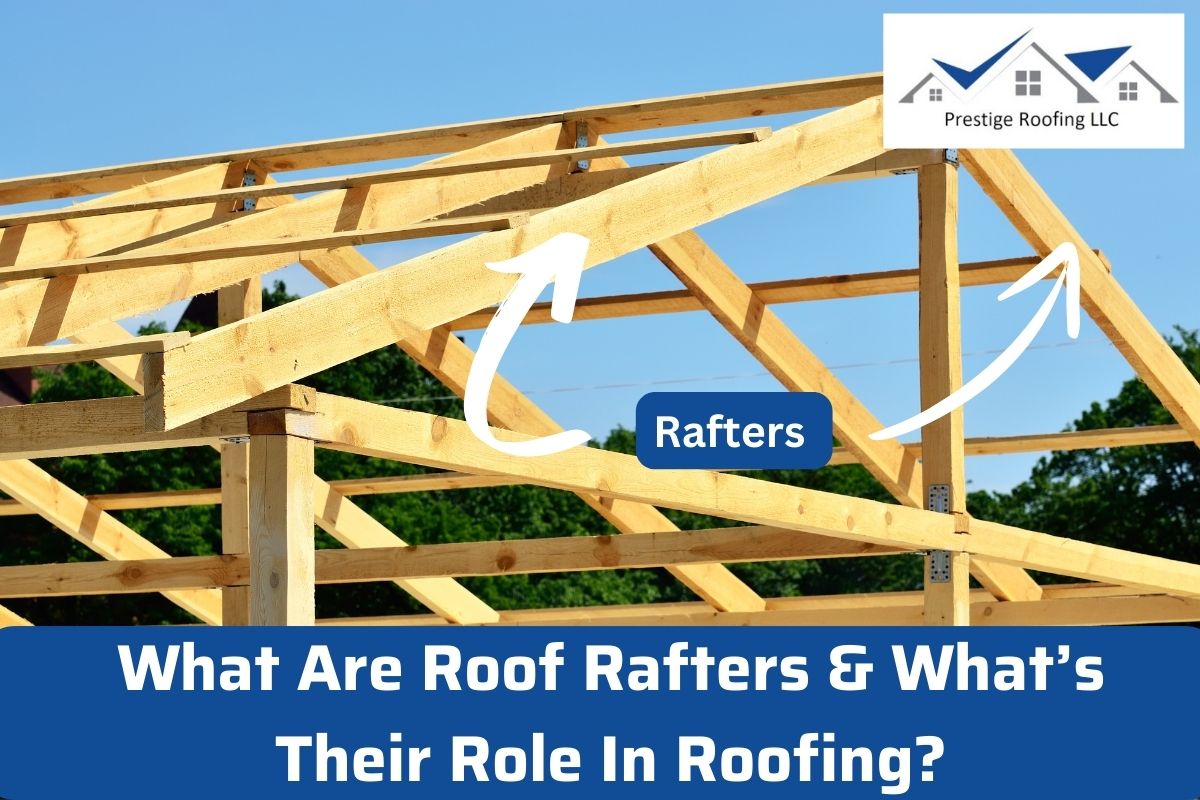

Roof rafters form the backbone of your home’s structural system, working tirelessly to support the weight of your roof and protect your family from the elements. These critical wooden beams bear enormous weight from snow, rain, wind, and the roofing materials themselves. When rafters begin to fail, the consequences can be devastating, ranging from minor leaks to catastrophic roof collapse.
Many homeowners remain unaware of potential rafter problems until significant damage has already occurred. Signs of damaged roof rafters often develop gradually, making early detection challenging without knowing what to look for. Structural roof damage can manifest in subtle ways that are easy to overlook during routine home maintenance.
Recognizing the early warning signs of rafter deterioration can mean the difference between a manageable repair and a major reconstruction project. Symptoms of a sagging roof, unusual creaking sounds, and visible cracks in ceilings often indicate roof support beam problems that require immediate attention. Attic rafter deterioration commonly occurs due to leaks, pest infestations, or simply the natural aging process of wooden structural components.
Understanding these warning signals empowers homeowners to take proactive measures before minor issues escalate into serious safety hazards. A thorough roof rafter inspection can reveal problems that might otherwise go unnoticed until emergency repairs become necessary.
Visual Clues You Can Spot From Inside Your Home
Homeowners can identify signs of damaged roof rafters by carefully observing changes inside their living spaces. Sagging ceiling lines represent one of the most obvious indicators of structural roof damage, appearing as visible dips or curves where ceilings should remain straight and level. These deformations often signal that roof support beam problems have compromised the structural integrity above.
Cracks in walls or ceilings frequently accompany rafter stress, typically appearing as hairline fractures that gradually widen over time. Pay particular attention to cracks that run along corners where walls meet ceilings, as these areas experience the most stress from failing rafters. Doors and windows that suddenly stick, refuse to close properly, or show gaps around their frames indicate that the frame of the house has shifted due to a compromised roof.
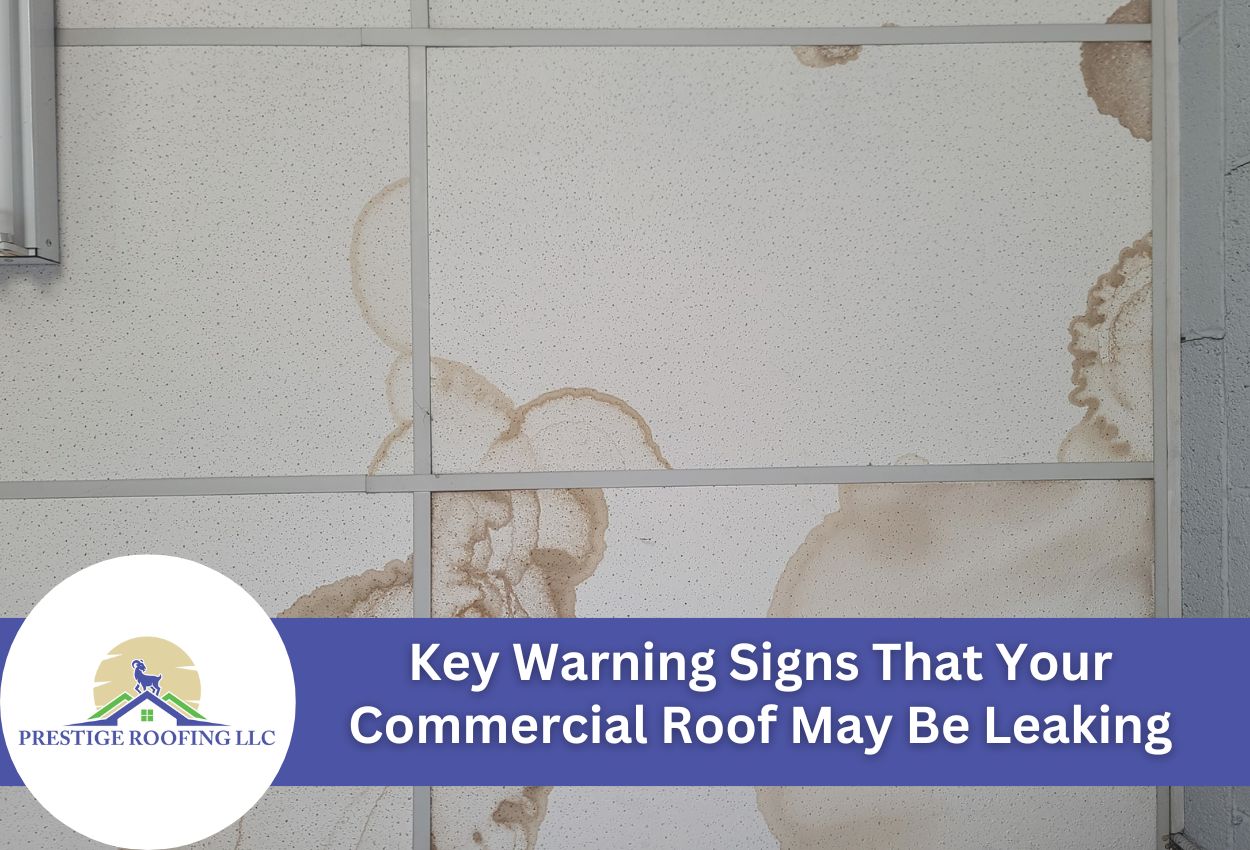
Water stains and discoloration on upper-floor ceilings or walls reveal leaks that accelerate attic rafter deterioration. These stains often appear as brown or yellow patches that expand during wet weather. Musty odors in bedrooms or upper living areas can signal hidden moisture damage affecting the roof’s support system, even when visible stains have not yet appeared.
What to Look for During an Attic Inspection
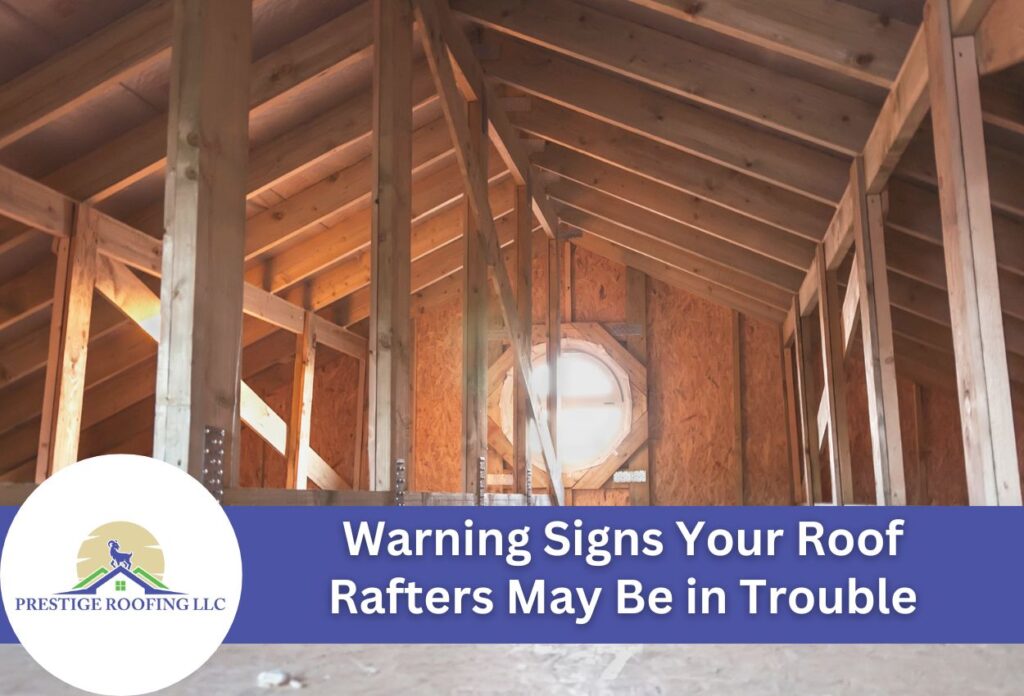
Conducting a thorough roof rafter inspection requires an examination of the attic, where structural damage becomes most apparent. Begin by ensuring adequate lighting and safe footing before entering the attic. Look for visible cracks running along the length of wooden rafters, particularly hairline fractures that may indicate stress from excessive weight or settling. These cracks often start small but can quickly expand under continued pressure from excess weight and weather conditions.
Examine each rafter for signs of bowing or sagging, which suggests the wood has weakened beyond its load-bearing capacity. Straight rafters should maintain their original shape without curves or dips. Any deviation from straight lines indicates potential structural roof damage that requires professional evaluation. Pay close attention to connections where rafters meet ridge beams and wall plates, as these joints experience the greatest stress.
Signs of damaged roof rafters include dark staining, soft spots, or crumbling wood that indicate rot or moisture damage. Insect damage appears as small holes, sawdust piles, or hollow-sounding wood when tapped. Termites and carpenter ants can severely compromise rafter strength without obvious external signs. Check for white fungal growth or black mold, which signals ongoing moisture problems causing attic rafter deterioration.
Document any roof support beam problems with photographs and measurements to track progression over time before consulting roofing professionals about necessary repairs.
External Red Flags on Your Roofing Surface
The exterior of your home can reveal critical signs of damaged roof rafters that often go unnoticed during casual observation. A wavy or uneven roofline represents one of the most telling indicators of structural roof damage, creating visible undulations where the roof edge should appear perfectly straight. These irregularities develop when compromised rafters can no longer maintain their original position under the weight of roofing materials and water or snow.
Missing or damaged shingles in specific patterns frequently point to underlying roof support beam problems. When rafters sag or shift, they create uneven surfaces that cause shingles to buckle, crack, or blow away more easily in those affected areas. Gutters pulling away from the house indicate that the fascia boards and underlying rafter ends have weakened or bent due to structural instability.
Ice dams forming consistently in the same locations suggest attic rafter deterioration has created air leaks or insulation gaps. These conditions allow warm air to escape unevenly, melting snow that refreezes at the roof’s edges. Areas where snow melts in unusual patterns across the roofing surface reveal hot spots caused by compromised structural members, allowing heat transfer.
Persistent leaks that return after shingle repairs often originate from the symptoms of a sagging roof that prevent proper water drainage. When rafters lose their structural integrity, they create low spots where water pools instead of flowing toward gutters, leading to ongoing leaks regardless of surface repairs.
Common Causes Behind Rafter Deterioration
Weather conditions represent the main threat to rafter integrity, with leaks causing the most widespread structural roof damage. Rain and snow can get through damaged shingles, creating wet conditions that promote wood rot and weaken load-bearing capacity over time. Freeze-thaw cycles add to this damage by expanding trapped moisture within wood fibers, creating cracks that accelerate deterioration.
Age naturally weakens wooden rafters as the lumber loses its original strength and flexibility over decades of service. Poor installation practices create vulnerabilities that show up as sagging roofs years after construction, particularly when rafters were not the right size for the roofing material or were improperly spaced. Inadequate ventilation traps moisture and heat in attic spaces, creating ideal conditions for attic rafter deterioration through condensation buildup and temperature extremes.
Pest infestations destroy rafter strength through boring insects like carpenter ants and termites that hollow out structural members from within. These creatures often work undetected for months before signs of damaged roof rafters become visible. Heavy materials such as solar panels or accumulated debris can overload rafters beyond their design capacity. Regular roof rafter inspections can identify these contributing factors before they compromise the entire roof, allowing property owners to address underlying causes rather than just symptoms.
When DIY Assessment Becomes Dangerous
Many homeowners attempt their own roof rafter inspection to save money, but this approach can create serious safety hazards and lead to inaccurate assessments. Climbing into attics without proper lighting, protective equipment, and knowledge of structural load paths puts individuals at risk of falling through ceilings or encountering dangerous conditions. Attic spaces contain electrical wiring, insulation materials, and sharp edges that could cause injury to untrained individuals attempting to evaluate structural roof damage.
Visual inspections conducted by homeowners often miss critical signs of damaged roof rafters that require professional expertise to identify properly. Structural engineers and roofing contractors possess specialized training to recognize subtle indicators of roof support beam problems that appear normal to untrained eyes. Stress fractures, connection failures, and early-stage attic rafter deterioration frequently remain hidden from amateur inspections, allowing damage to progress unchecked.
Professional evaluation becomes essential when issues appear, and determining the extent of structural compromise requires engineering analysis beyond simple visual assessment. Experienced contractors use specialized tools and measurement techniques to evaluate load-bearing capacity and safety margins that DIY inspections cannot provide. Attempting repairs or modifications without proper structural knowledge can worsen existing problems or create new safety hazards that endanger occupants and property.
Taking Action When You Discover Rafter Problems
Discovering signs of damaged roof rafters requires immediate response to protect both occupants and property from potential collapse. This priority involves evacuating any rooms directly beneath suspected structural roof damage and restricting access to these areas until a professional assessment can determine safety levels. Remove valuable items from potentially affected spaces and avoid placing additional weight on compromised ceiling areas through furniture or storage placement.
Contact emergency services if the symptoms of a sagging roof appear severe or if cracks in rafters show visible movement. Place tarps over exterior roof areas where leaks have developed to prevent further moisture intrusion that accelerates attic rafter deterioration. Document all visible damage with photographs and detailed notes to provide roofing contractors with comprehensive information during initial consultations.
Effective communication with roofing professionals requires a clear description of observed roof support beam problems and their progression over time. Provide contractors with access to attic spaces and remove stored items that might obstruct their roof rafter inspection process. Prepare questions about repair timelines, structural implications, and temporary protection measures while permanent solutions are implemented.
Professional rafter assessment typically involves structural analysis, load calculations, and a comprehensive evaluation of surrounding components. Expect contractors to examine connection points, measure deflection, and test wood integrity using specialized equipment. Qualified professionals will provide detailed repair plans addressing underlying causes rather than just visible symptoms, ensuring long-term structural stability and preventing future deterioration of critical roof support systems.
Trust Prestige Roofing LLC for Expert Rafter Repair
If you’ve noticed any of the signs of damaged roof rafters in your home, such as sagging ceilings, stuck doors, or uneven roof lines, it’s important to act fast to ensure the safety and structural integrity of your property. At Prestige Roofing LLC, we specialize in diagnosing and repairing roof rafter issues, ensuring your home remains safe and secure.
Don’t wait for a small problem to become a major headache. Call Prestige Roofing LLC today at (920) 791-0414 to schedule a comprehensive roof rafter inspection. Our experienced team is ready to provide you with professional advice and quality repair services tailored to your specific needs.